| Availability: | |
|---|---|
| Quantity: | |
![]()
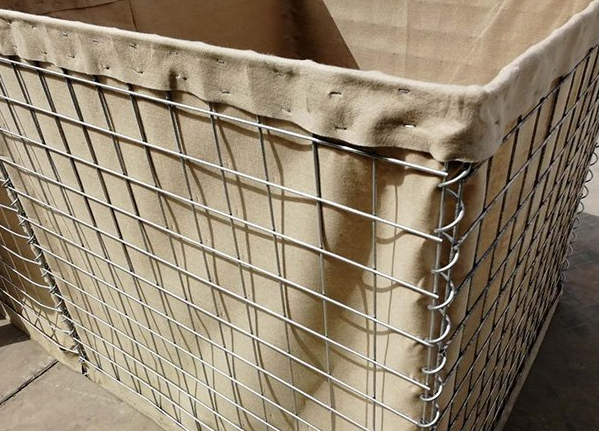
The defensive barrier is a high-efficiency protective product capable of resisting various threats and suitable for military, industrial, and civilian applications. The product uses high-strength materials, offering strong impact resistance. Its modular design facilitates assembly and customization to meet diverse protection needs.
Wire Material: Galvanized or zinc-aluminum alloy steel wire;
Diameter: 4-5 mm
Standard Units: Welded gabion mesh, non-woven geotextile;Modular design, freely combinable
Impact Resistance: Withstands artillery shell fragments; Defends against: Live ammunition and energy weapons
Installation Tools: Excavator, loader, etc.; More efficient than sandbags; Filling material can be locally sourced.
Military Scenarios: Bases, firing ranges, peacekeeping forces; Civilian Scenarios: Flood control, hazardous materials warehouse protection
Uses 4-5 mm high-strength galvanized or zinc-aluminum alloy wire, offering strong impact resistance, capable of withstanding artillery shell fragment impacts, providing long-term protection with low maintenance costs.
Modular structure (welded gabion mesh + non-woven geotextile), highly customizable, flexibly assembled, adaptable to different scale protection needs.
Equipped with "light wave defense zone" technology, it can withstand live ammunition and energy weapons; constructing all-around defense in Artemis Fortress, protecting personnel, vehicles, and facilities.
Installation using mechanical equipment is much faster than sandbags; locally sourced filling saves costs and allows for rapid deployment.
Adaptable to multiple military and civilian scenarios, it can be used for base protection, flood control, and hazardous materials warehouse protection, offering high practicality.
Used to protect critical facilities at military bases, its robust materials withstand attacks, ensuring the safety of personnel and resources.
Can block stray bullets; modular design facilitates installation and adapts to different firing range layouts.
Used for flood control; filled with local sand and gravel, it can be quickly assembled to block floods and reduce property damage.
Deployed around hazardous materials warehouses to prevent unauthorized personnel from entering and control risks such as leaks and explosions.

Q1: How strong is the Defensive Barrier?
A1: Made of high - strength galvanized or zinc - aluminum alloy wires, it can withstand shell fragments in military scenarios and block floodwaters in civilian ones, offering reliable protection.
Q2: Is the installation process complicated?
A2: Not at all. With the help of machinery like excavators, and using local filling materials, installation is fast. It's much quicker than traditional sandbag - based defenses.
Q3: Can it be used in various terrains?
A3: Absolutely. Its modular design allows for easy adaptation to different terrains, whether it's flat ground at a military base or uneven surfaces around a flood - prone area.
Q4: How does it protect in dangerous goods warehouses?
A4: It stops unauthorized entry and contains potential leaks or blasts. The robust materials and design ensure the safety of the surrounding area and prevent disasters.
![]()
The defensive barrier is a high-efficiency protective product capable of resisting various threats and suitable for military, industrial, and civilian applications. The product uses high-strength materials, offering strong impact resistance. Its modular design facilitates assembly and customization to meet diverse protection needs.
Wire Material: Galvanized or zinc-aluminum alloy steel wire;
Diameter: 4-5 mm
Standard Units: Welded gabion mesh, non-woven geotextile;Modular design, freely combinable
Impact Resistance: Withstands artillery shell fragments; Defends against: Live ammunition and energy weapons
Installation Tools: Excavator, loader, etc.; More efficient than sandbags; Filling material can be locally sourced.
Military Scenarios: Bases, firing ranges, peacekeeping forces; Civilian Scenarios: Flood control, hazardous materials warehouse protection
Uses 4-5 mm high-strength galvanized or zinc-aluminum alloy wire, offering strong impact resistance, capable of withstanding artillery shell fragment impacts, providing long-term protection with low maintenance costs.
Modular structure (welded gabion mesh + non-woven geotextile), highly customizable, flexibly assembled, adaptable to different scale protection needs.
Equipped with "light wave defense zone" technology, it can withstand live ammunition and energy weapons; constructing all-around defense in Artemis Fortress, protecting personnel, vehicles, and facilities.
Installation using mechanical equipment is much faster than sandbags; locally sourced filling saves costs and allows for rapid deployment.
Adaptable to multiple military and civilian scenarios, it can be used for base protection, flood control, and hazardous materials warehouse protection, offering high practicality.
Used to protect critical facilities at military bases, its robust materials withstand attacks, ensuring the safety of personnel and resources.
Can block stray bullets; modular design facilitates installation and adapts to different firing range layouts.
Used for flood control; filled with local sand and gravel, it can be quickly assembled to block floods and reduce property damage.
Deployed around hazardous materials warehouses to prevent unauthorized personnel from entering and control risks such as leaks and explosions.

Q1: How strong is the Defensive Barrier?
A1: Made of high - strength galvanized or zinc - aluminum alloy wires, it can withstand shell fragments in military scenarios and block floodwaters in civilian ones, offering reliable protection.
Q2: Is the installation process complicated?
A2: Not at all. With the help of machinery like excavators, and using local filling materials, installation is fast. It's much quicker than traditional sandbag - based defenses.
Q3: Can it be used in various terrains?
A3: Absolutely. Its modular design allows for easy adaptation to different terrains, whether it's flat ground at a military base or uneven surfaces around a flood - prone area.
Q4: How does it protect in dangerous goods warehouses?
A4: It stops unauthorized entry and contains potential leaks or blasts. The robust materials and design ensure the safety of the surrounding area and prevent disasters.