
- All
- Product Name
- Product Keyword
- Product Model
- Product Summary
- Product Description
- Multi Field Search
English


| Quantity: | |
|---|---|


Steel wire specification: 4-5mm galvanized/zinc aluminum alloy, tensile strength up to 1500MPa level
Protection level: Passed A-level anti explosion certification, able to withstand 120mm mortar shrapnel impact
Assembly efficiency: A team of 5 people can complete a 100 meter standard construction within 2 hours
Environmental characteristics: Recyclable materials account for 85%, and natural aggregates are used as fillers to reduce cement dependence
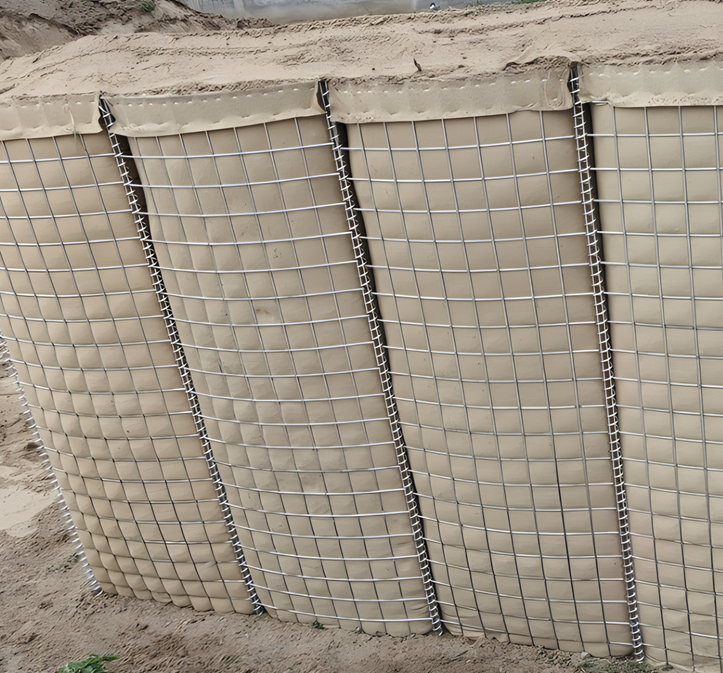
Q1: How strong is the Defensive Barrier?
A1: Made of high - strength galvanized or zinc - aluminum alloy wires, it can withstand shell fragments in military scenarios and block floodwaters in civilian ones, offering reliable protection.
A2: Yes, the defensive barrier can be customized in terms of size specifications, material processes, appearance colors, structural functions, and packaging delivery.
A3: Not at all. With the help of machinery like excavators, and using local filling materials, installation is fast. It's much quicker than traditional sandbag - based defenses.
A4: Absolutely. Its modular design allows for easy adaptation to different terrains, whether it's flat ground at a military base or uneven surfaces around a flood - prone area.
A5: Email: 17331466463@steelwiremeshfactory.com; 17331468011@steelwiremeshfactory.com
WhatsApp: +86 17331466463; +86 17331468011
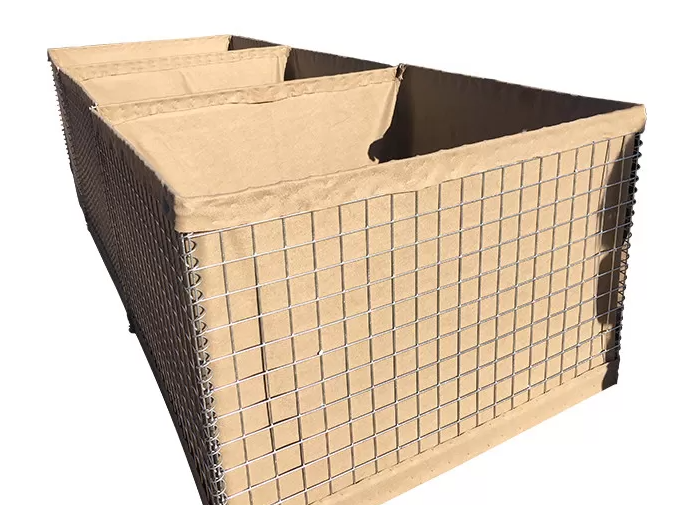
In military bases, this barrier forms a "hard shell soft foundation" composite protective layer, effectively resisting drone bombing and long-range firepower strikes; In the flood plain, its gradient pore structure is both water blocking and permeable, achieving dual effects of ecological flood control in conjunction with vegetation restoration; In the hazardous chemical storage area, modular isolation belts can quickly build a triple safety buffer zone to prevent the spread of secondary disasters.
Through triple innovation in materials science, structural engineering, and intelligent defense technology, this product redefines the standards of modern protective barriers, achieving the optimal balance between safety performance, economic cost, and ecological benefits, and becoming a benchmark choice for national defense construction and people's livelihood protection.


