
- All
- Product Name
- Product Keyword
- Product Model
- Product Summary
- Product Description
- Multi Field Search
English


Views: 0 Author: Site Editor Publish Time: 2026-05-28 Origin: Site


Slope stabilization challenges routinely push infrastructure limits. Engineers face relentless threats from hydrostatic pressure and differential ground settlement daily. You cannot ignore these powerful natural forces when designing reliable retaining sites. Project managers and contractors frequently default to traditional cast-in-place concrete or block retaining walls. They often underestimate the steep drainage costs and strict soil adaptability these rigid structures demand. Concrete inevitably cracks when the ground shifts beneath it. We must look beyond conventional methods to solve modern site issues.
This article provides an evidence-based comparison between traditional retaining walls and rock-filled wire systems. You will learn how to choose the right structural approach based on specific site demands, distinct load capacities, and precise budget constraints. We will explore structural mechanics, installation realities, and lifespan vulnerabilities deeply. By the end, you can confidently select the optimal barrier for your next demanding civil project.
Gabion Baskets offer unparalleled permeability and flexibility, completely neutralizing hydrostatic pressure without complex external drainage systems.
Traditional concrete retaining walls are superior for supporting heavy dynamic/live loads (e.g., highways, commercial parking lots) but are highly vulnerable to cracking from ground shifts.
While gabion materials are highly cost-effective, installation is strictly labor-intensive (requiring hand-packing of angular rocks).
System readiness is immediate for gabions (no concrete curing required), making them ideal for rapid emergency deployment and extreme topography.
Hydrostatic pressure destroys walls rapidly. Rainwater seeps deep into the soil. The trapped liquid adds massive weight behind the physical barrier. This creates unimaginable lateral force. The primary cause of retaining wall failure is this trapped water weight. Standard walls struggle immensely under this extra load.
Rigid systems rely entirely on absolute structural stiffness. Traditional walls require engineered backfill to survive. Builders must install integrated horizontal drains. They must drill weep holes through the concrete face. If these drains clog, the wall will collapse under the immense water pressure. Conversely, wire and rock systems act as monolithic gravity structures. Their inherent void space allows maximum water flow. They neutralize water pressure immediately. They inherently solve drainage problems naturally.
We see distinct system variants governed by rigorous engineering standards. A Hexagnal Gabion Box strictly conforms to ASTM A975. Manufacturers weave double-twist wire mesh carefully. This provides immense structural redundancy. If one wire snaps, the entire structure does not unravel. This design offers maximum flexibility for highly unstable ground. Alternatively, a Welded Gabion Box adheres to ASTM A974. Builders appreciate the stiffer, flatter architectural finish. However, rigid welded wire accommodates far less ground settlement than woven mesh.
Load bearing requirements dictate material choices directly. Gabion Baskets manage static loads exceptionally well. They easily retain loose earth and heavy water. They act as a rapid Defensive Barrier against fast-moving flash floods. However, rigid concrete walls perform much better under high live loads. Highways and commercial parking lots require poured concrete to support dynamic vehicle surcharge loads.
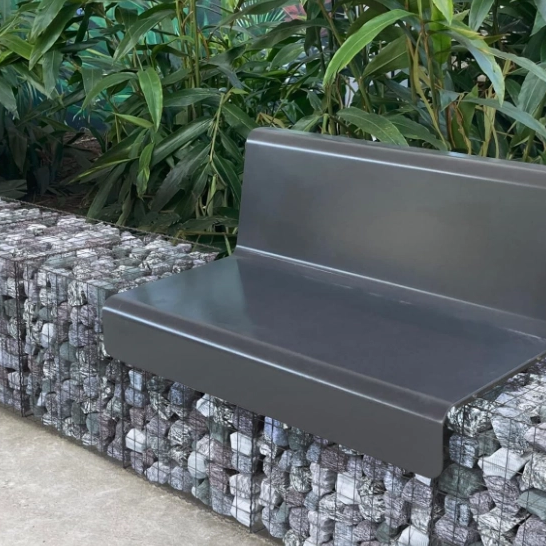
Site demands often dictate your structural approach. Traditional retaining walls demand massive construction equipment. You need heavy excavators to dig deep trenches. You must secure large staging areas for lumber, rebar, and concrete trucks. Many remote mountain roads or tight urban backyards lack this necessary space.
Wire cages offer a highly versatile alternative. You can install them in incredibly tight areas. They adapt to non-uniform, jagged terrains easily. They leave a minimal ecological footprint on delicate sites. Teams utilize manual labor primarily. They bypass the need for heavy machinery entirely. This proves invaluable for restricted environmental zones.
The assembly process requires immense transparency and skill. You do not just dump round rocks into a wire bin. The installation demands precise, deliberate steps.
Workers unpack and unfold the flat-packed wire mesh.
They assemble the cage into a rigid rectangular shape.
Installers insert internal wire stiffeners across the middle sections. These prevent the outer face from bulging outward.
Crews hand-pack 3-to-8-inch angular rocks inside the compartments carefully.
Workers meticulously lace the lids shut securely after achieving full compaction.
You must strictly use angular stones. Never use smooth river rocks. Round stones slide against one another under pressure. They cause severe structural bulging. Angular rocks interlock physically like puzzle pieces. They create vital internal friction to hold the wall together.
Immediate completion defines this flexible system. Poured concrete demands extensive curing time. You must wait days or weeks before applying soil loads. Once workers tie and fill a wire basket, its structural integrity reaches 100%. System readiness occurs immediately. This advantage proves critical during urgent flood-damage repairs. You can deploy them instantly during emergency topography failures.
Financial planning requires evaluating distinct material and labor dynamics. Material economics heavily favor wire and rock structures. The base materials cost remarkably little.
Standard galvanized wire mesh runs roughly $1 to $6 per square foot. Bulk angular rock fill costs about $30 to $50 per ton. These materials are drastically cheaper than poured concrete. They undercut engineered Mechanically Stabilized Earth (MSE) block prices significantly.
Labor trade-offs complicate the financial picture considerably. You must contrast the low material cost against high assembly labor. Wire cages demand intense manual effort. Workers must assemble the units manually on-site. They must lace every seam by hand. Precise stone placement consumes massive amounts of time. You can expect to pay $40 to $100 per hour for specialized professional installation. Traditional walls require expensive materials but demand fewer manual man-hours.
Hidden savings often tip the scales entirely. Wire systems eliminate costly secondary infrastructure. You avoid installing complex PVC drainage pipelines. The large rock voids drain water naturally. You also skip deep frost-footing requirements. Traditional rigid walls require deep trenches. Workers must dig completely below the regional frost line. They do this to prevent seasonal ice heaving. Flexible wire structures simply adapt to seasonal ground shifts naturally. This flexibility avoids expensive deep-trench excavation.
System Component | Gabion System Profile | Concrete Wall Profile |
|---|---|---|
Base Materials | Low Cost | High Cost |
Installation Labor | High Intensity | Moderate Intensity |
Drainage Infrastructure | None Required | Extensive Required |
Footing Excavation | Shallow (12-18 inches) | Deep (Below frost line) |
Material lifespan depends heavily on the surrounding climate. Cast-in-place concrete lasts indefinitely under perfect conditions. However, it remains highly prone to cracking. Seasonal freeze-thaw cycles expand and contract the ground violently. Concrete cannot bend. It cracks under this immense pressure.
Galvanized wire cages offer impressive longevity. They typically last up to 50 years in mild inland conditions. Premium PVC-coated wire extends this lifespan significantly. The durable plastic layer pushes the lifespan to 60+ years. PVC coatings remain absolute requirements in corrosive or constantly wet environments.
You must carefully heed severe environmental exclusions. We strongly warn against using standard galvanized cages in high-salt environments. Marine coastlines destroy unprotected zinc coatings rapidly. Accelerated corrosion will cause premature structural failure. You must specify heavy PVC-coated materials for oceanfront projects.
You need an evidence-based maintenance protocol. Perform an annual inspection matrix to ensure long-term stability.
Check the exterior wire facing for localized damage. Look closely for snapped wires resulting from major debris collision impacts.
Ensure no excavation occurs near the base. You must ban digging within 0.5 meters of the wall face to prevent sudden basal collapse.
Remove thick internal woody vegetation promptly. Deep tree roots will eventually burst the metal mesh apart.
Ignore superficial top-growth. Shallow weeds and surface moss remain harmless to the heavy structural core.
Choosing your structural solution requires careful site evaluation. You must weigh terrain, water, and load factors accurately. Use the following framework to shortlist your engineering solution confidently.
The site experiences heavy groundwater flow. The property suffers from severe Erosion Control issues.
The local soil remains soft and highly prone to shifting. Differential settlement occurs frequently in your region.
Property lines restrict heavy machinery access. Large excavators simply cannot reach the construction zone safely.
The project demands a natural visual style. You desire a permeable, highly organic aesthetic for parklands or residential borders.
The wall must support immediate overhead traffic. The structure faces heavy dynamic live loads from commercial parking lots or highways.
Manual labor costs remain prohibitively high in your specific region. Paying manual hand-packing crews outweighs the heavy concrete material costs.
The design requires a narrow vertical profile. Space is strictly limited. Wire structures typically require a 6:1 step-back ratio. This angle consumes significant horizontal space.
Let us summarize the final structural verdict. The choice between these engineering solutions is rarely about raw material strength. It revolves entirely around how your specific site manages groundwater flow and soil movement. Wire and rock gravity systems win decisively in overall adaptability. They provide unmatched natural drainage capabilities. They conquer challenging, uneven topographies effortlessly. Conversely, poured concrete heavily dominates high-load, rigid infrastructure environments.
You must take the right next steps immediately. We highly recommend consulting a licensed geotechnical engineer. Have them thoroughly evaluate your exact soil composition before you finalize any blueprints. Always specify the correct geotextile backing. Standardize on reliable materials like AASHTO M 288 Class 2 before purchasing anything. Proper early planning guarantees decades of unyielding slope stability.
A: Angular rocks provide crucial structural interlocking. The sharp, jagged edges grip each other tightly. This action creates massive internal friction. Smooth river stones slide against one another under pressure. This sliding forces the wire cage to bulge outward and deform permanently over time.
A: You do not need deep concrete frost footings. However, you must dig a shallow 12-to-18-inch trench. Fill this trench with compacted gravel. This creates a stable, level pad for the first basket layer. It prevents uneven ground settling and stops basal sliding.
A: Standard engineering limits for tiered gravity structures peak around 30 feet (9 meters). If you need to build higher than this limit, the sheer weight becomes problematic. Taller designs require advanced soil-nailing integration and highly specialized structural wall reinforcement.
A: Yes. You must place permeable geotextile fabric directly behind the wire wall. It acts as an essential soil filter. The fabric allows groundwater to pass through easily. Crucially, it prevents fine backfill soil from washing out through the large rock voids.


