| Availability: | |
|---|---|
| Quantity: | |

With 245g/m ² high zinc galvanized steel wire as the skeleton, combined with PVC coating or 316L stainless steel reinforcement layer, it has been proven through salt spray acceleration test that it can maintain structural stability for more than 50 years in strong corrosive environments, build a dual anti-corrosion barrier, and exceed the durability limit of traditional materials.
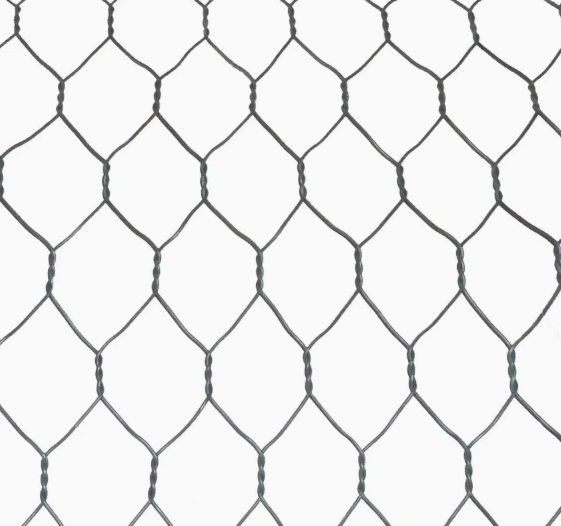
The original twisted hexagonal mesh achieves three-dimensional stress balanced distribution, and the measured compressive strength reaches 500kN/m ² without plastic deformation. The modular toothed interlocking design automatically forms a self stabilizing system under dynamic loads, suitable for the protection of hundred meter retaining walls and high steep slopes. The dynamic stability has been verified through impact testing.
With a porosity of over 35%, a three-dimensional water circulation channel is formed, reducing static water pressure by 90% and eradicating soil erosion and waterlogging problems. Open grid supports vegetation root penetration, forming an "engineering biological" composite protective layer, achieving synergistic efficiency between slope ecological restoration and engineering protection.
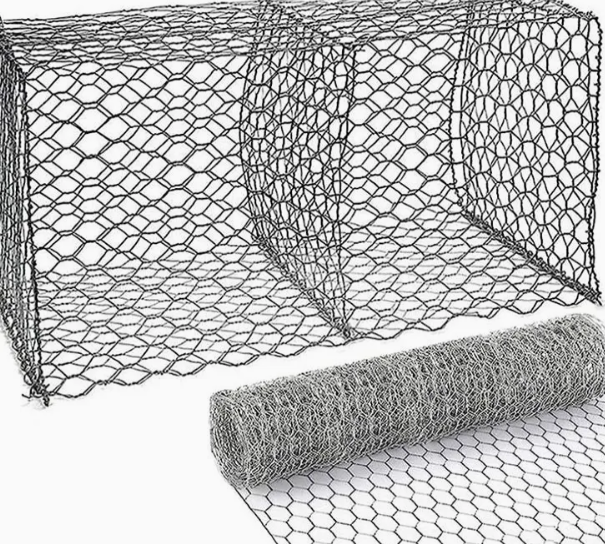
Standardized modules cover a 1-3m ³ grading system, patented quick installation buckles enable tool free assembly, and a two person team can install up to 50m ³ per day, increasing efficiency by 300%, reducing costs by 40%, and shortening construction time by 70%.
Yangtze River tributary project reduces erosion by 85% and builds fish spawning grounds
Southwest Mudflow Prevention and Control Increases Impact Resistance by 200%
Shanghai Binjiang Trail integrates solar lighting to create a landmark of light and shadow
compliant with ASTM C4-C5 standards, suitable for harsh marine/chemical environments
built-in stress displacement monitoring module, real-time data cloud platform warning
Developing biodegradable biological fillers to achieve zero pollution throughout the entire lifecycle
3D terrain modeling automatically generates optimal module layout scheme with millimeter level accuracy
This plan integrates material innovation, structural optimization, and ecological technology to build a new infrastructure paradigm of "protection ecology intelligence" in the fields of water conservancy engineering, municipal construction, landscape design, etc., becoming a benchmark solution for green infrastructure construction.

Q1: How long can the gabion box last?
A: Made of corrosion - resistant materials like galvanized steel, it can last over 50 years in normal conditions. The zinc coating and wire quality ensure long - term durability.
Q2: Is the installation of gabion boxes difficult?
A: Not at all. Their modular design allows for easy assembly. A regular team can quickly install them. Installation instructions are provided, and no special skills are required.
Q3: Can the gabion box withstand heavy floods?
A: Definitely. With its stable structure and high - strength wire mesh, it can endure the strong impact of floods. Tests show it can resist high - speed water flow, protecting riverbanks effectively.
Q4: What kind of filling materials are suitable?
A: Stones are the most common. They should be of appropriate size, usually 8 - 16 cm. Gravel and broken concrete can also be used, as long as they can fill the box tightly for better stability.

With 245g/m ² high zinc galvanized steel wire as the skeleton, combined with PVC coating or 316L stainless steel reinforcement layer, it has been proven through salt spray acceleration test that it can maintain structural stability for more than 50 years in strong corrosive environments, build a dual anti-corrosion barrier, and exceed the durability limit of traditional materials.
The original twisted hexagonal mesh achieves three-dimensional stress balanced distribution, and the measured compressive strength reaches 500kN/m ² without plastic deformation. The modular toothed interlocking design automatically forms a self stabilizing system under dynamic loads, suitable for the protection of hundred meter retaining walls and high steep slopes. The dynamic stability has been verified through impact testing.
With a porosity of over 35%, a three-dimensional water circulation channel is formed, reducing static water pressure by 90% and eradicating soil erosion and waterlogging problems. Open grid supports vegetation root penetration, forming an "engineering biological" composite protective layer, achieving synergistic efficiency between slope ecological restoration and engineering protection.
Standardized modules cover a 1-3m ³ grading system, patented quick installation buckles enable tool free assembly, and a two person team can install up to 50m ³ per day, increasing efficiency by 300%, reducing costs by 40%, and shortening construction time by 70%.
Yangtze River tributary project reduces erosion by 85% and builds fish spawning grounds
Southwest Mudflow Prevention and Control Increases Impact Resistance by 200%
Shanghai Binjiang Trail integrates solar lighting to create a landmark of light and shadow
compliant with ASTM C4-C5 standards, suitable for harsh marine/chemical environments
built-in stress displacement monitoring module, real-time data cloud platform warning
Developing biodegradable biological fillers to achieve zero pollution throughout the entire lifecycle
3D terrain modeling automatically generates optimal module layout scheme with millimeter level accuracy
This plan integrates material innovation, structural optimization, and ecological technology to build a new infrastructure paradigm of "protection ecology intelligence" in the fields of water conservancy engineering, municipal construction, landscape design, etc., becoming a benchmark solution for green infrastructure construction.

Q1: How long can the gabion box last?
A: Made of corrosion - resistant materials like galvanized steel, it can last over 50 years in normal conditions. The zinc coating and wire quality ensure long - term durability.
Q2: Is the installation of gabion boxes difficult?
A: Not at all. Their modular design allows for easy assembly. A regular team can quickly install them. Installation instructions are provided, and no special skills are required.
Q3: Can the gabion box withstand heavy floods?
A: Definitely. With its stable structure and high - strength wire mesh, it can endure the strong impact of floods. Tests show it can resist high - speed water flow, protecting riverbanks effectively.
Q4: What kind of filling materials are suitable?
A: Stones are the most common. They should be of appropriate size, usually 8 - 16 cm. Gravel and broken concrete can also be used, as long as they can fill the box tightly for better stability.