
- All
- Product Name
- Product Keyword
- Product Model
- Product Summary
- Product Description
- Multi Field Search
English


Views: 0 Author: Site Editor Publish Time: 2025-09-23 Origin: Site


Welded Gabion Mesh: Intelligent Protection and Ecological Collaborative Solution in Green Infrastructure
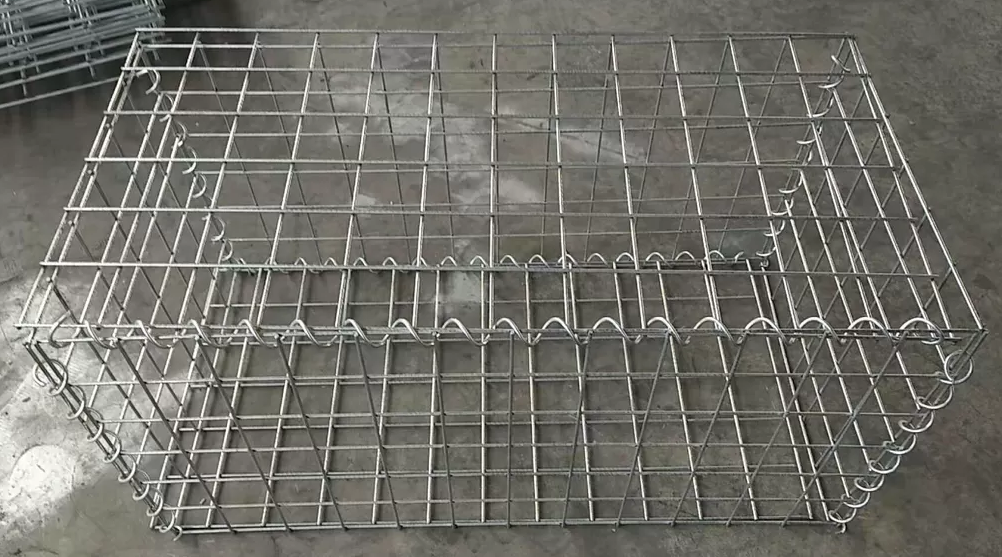
Welded gabion mesh is an innovative engineering material that uses galvanized/plastic coated steel wire welded into a rectangular mesh cage structure. With its triple innovation of material structure ecology, it has established a synergistic advantage of "protection ecology economy" in water conservancy, municipal, and landscape engineering, becoming a benchmark technology in the global green infrastructure field.
Material Innovation and Long term Protection
Using high-strength galvanized steel wire substrate, the surface is covered with a 40 μ m thick zinc layer or PVC composite coating to form a dual corrosion-resistant barrier. Verified by salt spray acceleration tests, this material can maintain structural stability for more than 25 years in harsh environments such as riverbank erosion and industrial corrosion, with a lifespan far exceeding traditional concrete and stone masonry structures. Its modular size covers a gradation of 0.3-8m ³ (adjustable in length, width, and height of 20-2000mm), suitable for diverse engineering needs.
Structural optimization and performance breakthrough
The welding node technology ensures that the static load of a single box can reach 1000kg without deformation, and the bearing capacity of a single module in the application of retaining walls can reach 2000kg (to be verified according to engineering specifications). The 50mm/100mm porosity design ensures a water and gas circulation efficiency of over 35%, forming a three-dimensional ecological channel. Experimental data shows that this structure can reduce static water pressure by 90%, fundamentally solving the problems of soil erosion and waterlogging, while allowing vegetation roots to penetrate and grow, achieving a dual function of "engineering protection ecological restoration".
Construction efficiency and economic value
Modular design supports a daily installation area of 1000 square meters for a team of 5 people, which increases construction efficiency by 300% compared to traditional techniques and shortens the construction period by 70%. The material cost has been reduced by 25% -35%, and the overall cost has been reduced by 40% compared to traditional solutions. Prefabricated installation does not require professional tools, and two people can complete module assembly, greatly reducing labor costs. Its maintenance cost is low, requiring only regular inspections, and its full lifecycle economy is significant.
Multi scenario intelligent application
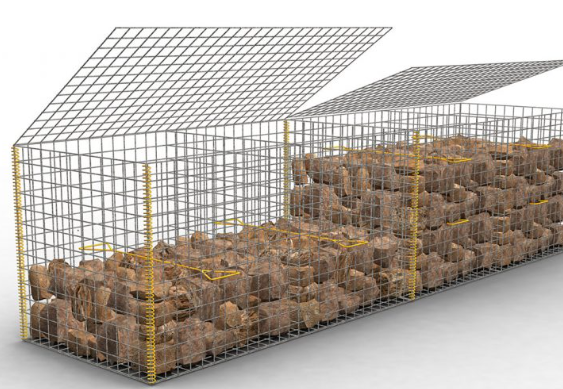
In riverbank ecological restoration projects, welding gabion nets can reduce shoreline erosion by 85% and simultaneously construct fish spawning grounds; The impact resistance of the Southwest debris flow prevention and control project has been increased by 200%; Integrating solar lighting into urban landscape projects to form interactive light and shadow walls; Industrial environmental protection complies with ASTM C4-C5 anti-corrosion standards and is suitable for offshore platforms and chemical parks. Its open grid architecture supports diversified filling of natural stone materials, decorative stone materials, etc., which not only meets the requirements of engineering strength, but also realizes the aesthetic value of landscape.
Ecological synergy and future directions
This technology constructs a water air cycle network through a porosity of over 35%, promoting microbial attachment and vegetation growth, forming a self-healing ecosystem. The forward-looking innovation directions include the built-in stress displacement monitoring module to achieve real-time data upload and warning, the development of biodegradable biological fillers to achieve zero pollution throughout the entire life cycle, and the automatic generation of optimal module layout schemes through 3D terrain modeling with millimeter level accuracy.
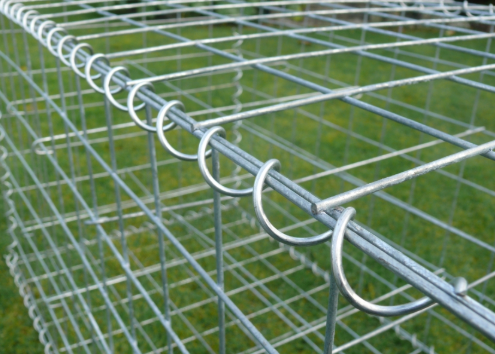
Welded gabion mesh, with its innovative paradigm of "protection ecology intelligence", has demonstrated unique advantages in addressing climate change and promoting sustainable development. When selecting for actual engineering projects, it is necessary to combine specific specifications to verify parameter differences, ensuring the dual realization of structural safety and ecological benefits, and providing key technical support for building green infrastructure that promotes harmonious coexistence between humans and nature.


