| Availability: | |
|---|---|
| Quantity: | |
JunHe
Outstanding Corrosion Resistance: Unlike traditional metal grating, fiberglass grating has inherent rust and corrosion resistance. This makes it ideal for harsh environments like chemical plants and wastewater treatment facilities, where contact with corrosive substances is common.
Excellent Strength-to-Weight Ratio: Made from high-quality glass fibers, fiberglass grating delivers strong load-bearing capacity—up to 3,000 lbs per square foot—while staying lightweight. It’s thus perfect for industrial walkways and platforms that need long-term durability.
Top-Tier Chemical Resistance: It can withstand a broad range of chemicals, including acids and alkalis. Lab tests show no damage after over 1,000 hours of immersion in a 10% sulfuric acid solution, guaranteeing reliability in chemical processing and wastewater-related applications.
Slip-Resistant Surface: Its textured design offers a friction coefficient of ≥0.6, reducing the risk of slips in wet or oily conditions. This is vital for stair treads and walkways in areas where safety is a top priority.
Lightweight but Durable: With the same specifications, fiberglass grating weighs only 25% of steel grating, yet it has a service life of over 20 years. This makes installation easier and cuts down on long-term costs.
Customizable Design: It can be tailored to meet specific project needs, such as circular openings or irregularly shaped platforms, ensuring a perfect fit for any application.
Length: Standard size is 1,200mm; customizable range is 500–3,000mm.
Width: Common sizes are 600mm/900mm; customizable range is 300–1,500mm.
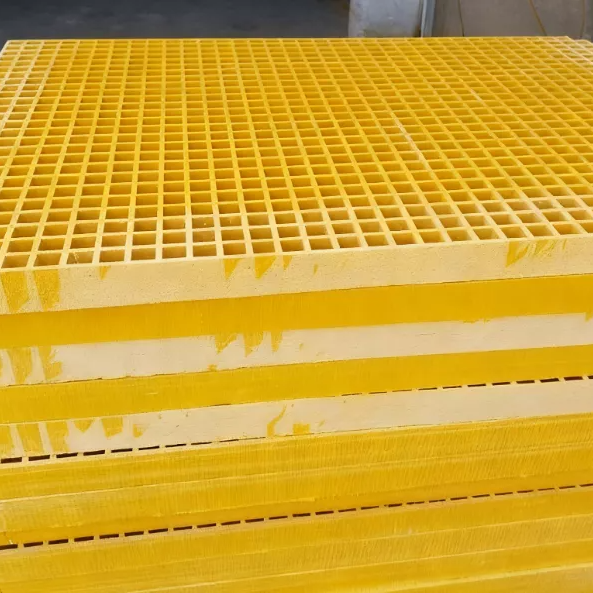
Thickness: Available options include 30mm, 38mm, and 50mm.
Uniform Load: 3,000–5,000 N/m² (varies based on thickness and structure).
Concentrated Load: Single-point load capacity ranges from 1,000–2,000 N.
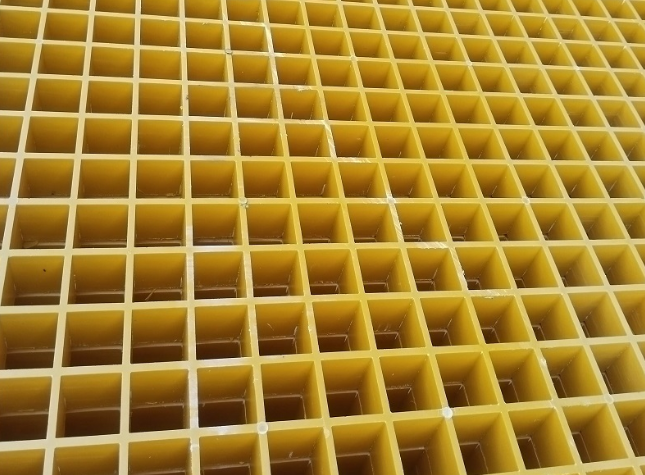
Crossbar Spacing: Usually 30mm or 40mm.
Longitudinal Bar Spacing: Typically 40mm or 50mm.
Glass Fiber Content: ≥70%.
Resin Types: Includes unsaturated polyester, vinyl ester, and more.
Tensile Strength: ≥500 MPa.
Bending Strength: ≥700 MPa.
Anti-Slip Layer: Granular texture with a friction coefficient of ≥0.6.
Coating: Corrosion-resistant finish; offers salt spray resistance for ≥1,000 hours.
Flame-Retardant Rating: Complies with the UL94-V0 standard.

Industrial Platforms: Used as operating platforms in factory workshops. Its high strength supports both equipment and personnel, while its resistance to chemicals ensures long-term safety and operational efficiency.
Building Stairs: The slip-resistant surface lowers the risk of falls, and its lightweight feature makes installation easier and reduces costs. It also has an attractive appearance that fits various architectural styles.
Sewage Treatment Facilities: It resists acids and alkalis, so it performs well in the corrosive environment of sewage treatment sites—ideal for use in walkways and grating systems.
Power Industry Maintenance Walkways: It has insulating properties and high strength, protecting maintenance workers in substations even in severe weather or under heavy foot traffic.
Offshore Operation Platforms: It can withstand seawater corrosion, UV radiation, and wave impacts, providing a stable and safe workspace for offshore personnel and equipment.
1. What is the lifespan of FIBERGLASS GRATING?
Under normal conditions, its lifespan can reach over 20 years. This is due to its corrosion - resistant materials and stable structure, ensuring long - term use without significant degradation.
2. Can FIBERGLASS GRATING be customized?
Absolutely. We offer customization services. You can tell us your specific requirements regarding size, shape, and surface treatment. Our team will tailor the product to meet your needs precisely.
3. How do you ensure the quality of FIBERGLASS GRATING?
We have strict quality control processes. Raw materials are carefully selected, and each production step is monitored. Products undergo multiple tests, like load - bearing and corrosion resistance tests, to guarantee high - quality output.
Outstanding Corrosion Resistance: Unlike traditional metal grating, fiberglass grating has inherent rust and corrosion resistance. This makes it ideal for harsh environments like chemical plants and wastewater treatment facilities, where contact with corrosive substances is common.
Excellent Strength-to-Weight Ratio: Made from high-quality glass fibers, fiberglass grating delivers strong load-bearing capacity—up to 3,000 lbs per square foot—while staying lightweight. It’s thus perfect for industrial walkways and platforms that need long-term durability.
Top-Tier Chemical Resistance: It can withstand a broad range of chemicals, including acids and alkalis. Lab tests show no damage after over 1,000 hours of immersion in a 10% sulfuric acid solution, guaranteeing reliability in chemical processing and wastewater-related applications.
Slip-Resistant Surface: Its textured design offers a friction coefficient of ≥0.6, reducing the risk of slips in wet or oily conditions. This is vital for stair treads and walkways in areas where safety is a top priority.
Lightweight but Durable: With the same specifications, fiberglass grating weighs only 25% of steel grating, yet it has a service life of over 20 years. This makes installation easier and cuts down on long-term costs.
Customizable Design: It can be tailored to meet specific project needs, such as circular openings or irregularly shaped platforms, ensuring a perfect fit for any application.
Length: Standard size is 1,200mm; customizable range is 500–3,000mm.
Width: Common sizes are 600mm/900mm; customizable range is 300–1,500mm.
Thickness: Available options include 30mm, 38mm, and 50mm.
Uniform Load: 3,000–5,000 N/m² (varies based on thickness and structure).
Concentrated Load: Single-point load capacity ranges from 1,000–2,000 N.
Crossbar Spacing: Usually 30mm or 40mm.
Longitudinal Bar Spacing: Typically 40mm or 50mm.
Glass Fiber Content: ≥70%.
Resin Types: Includes unsaturated polyester, vinyl ester, and more.
Tensile Strength: ≥500 MPa.
Bending Strength: ≥700 MPa.
Anti-Slip Layer: Granular texture with a friction coefficient of ≥0.6.
Coating: Corrosion-resistant finish; offers salt spray resistance for ≥1,000 hours.
Flame-Retardant Rating: Complies with the UL94-V0 standard.

Industrial Platforms: Used as operating platforms in factory workshops. Its high strength supports both equipment and personnel, while its resistance to chemicals ensures long-term safety and operational efficiency.
Building Stairs: The slip-resistant surface lowers the risk of falls, and its lightweight feature makes installation easier and reduces costs. It also has an attractive appearance that fits various architectural styles.
Sewage Treatment Facilities: It resists acids and alkalis, so it performs well in the corrosive environment of sewage treatment sites—ideal for use in walkways and grating systems.
Power Industry Maintenance Walkways: It has insulating properties and high strength, protecting maintenance workers in substations even in severe weather or under heavy foot traffic.
Offshore Operation Platforms: It can withstand seawater corrosion, UV radiation, and wave impacts, providing a stable and safe workspace for offshore personnel and equipment.
1. What is the lifespan of FIBERGLASS GRATING?
Under normal conditions, its lifespan can reach over 20 years. This is due to its corrosion - resistant materials and stable structure, ensuring long - term use without significant degradation.
2. Can FIBERGLASS GRATING be customized?
Absolutely. We offer customization services. You can tell us your specific requirements regarding size, shape, and surface treatment. Our team will tailor the product to meet your needs precisely.
3. How do you ensure the quality of FIBERGLASS GRATING?
We have strict quality control processes. Raw materials are carefully selected, and each production step is monitored. Products undergo multiple tests, like load - bearing and corrosion resistance tests, to guarantee high - quality output.