
- All
- Product Name
- Product Keyword
- Product Model
- Product Summary
- Product Description
- Multi Field Search
English


Views: 0 Author: Site Editor Publish Time: 2025-09-25 Origin: Site


Wire mesh fence: from practical invention to the invisible boundary of modern society
On the vast pastures of the western United States in the 19th century, an inventor named Joseph Glidon never imagined that his improved barbed wire would completely change the way humans define space. This invention, originally used to demarcate ranch boundaries, has now evolved into a universal boundary symbol spanning agriculture, industry, military, and even art fields, becoming one of the most representative spatial separation devices in modern society.
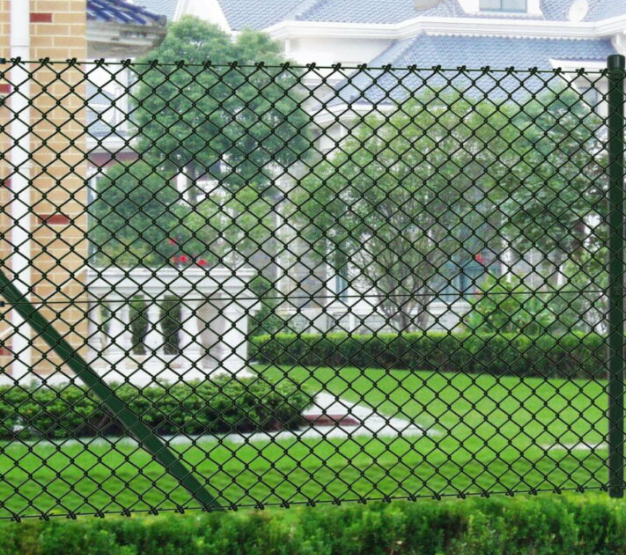
1、 Source of Invention: Technological Revolution from Ranch to Battlefield
In 1874, Gleiden added sharp spikes to the traditional wire mesh, and the birth of this "barbed wire mesh" completely solved the problem of cattle crossing borders. The essence of its design lies in the formation of psychological deterrence through physical pain, and this "soft defense" concept was later widely applied in the military field. During World War I, barbed wire became an important defensive fortification in trench warfare, and its low cost and efficient barrier properties made it a standard configuration in front of trenches. During World War II, the German army creatively developed snake belly shaped wire mesh, which enhanced defense effectiveness through the elasticity of spring steel plates.
In the field of materials science, wire mesh has evolved from ordinary carbon steel to galvanized steel wire. Modern galvanizing technology has extended the service life of wire mesh from the original 5-8 years to over 20 years. The Dutch company known as the 'Father of Gillnets' has even developed coating technology with self-healing capabilities. When the coating experiences minor damage, the zinc layer will automatically repair the damaged area through electrochemical action.
2、 Multidimensional Applications: Boundary Art from Farm to Space
In the field of agriculture, barbed wire fences form the cornerstone of modern animal husbandry. The "King of Seasons" fence system in Australia adopts precise grid spacing control technology, which can prevent sheep from escaping and prevent young livestock from getting stuck. In the Midwest of the United States, farms are popular for using the "Y-shaped column" structure, which resists strong winds through the principle of triangular stability.
In urban spaces, barbed wire fences have evolved into decorative elements on building facades. The barbed wire fence in New York's High Line Park transforms industrial relics into urban landscapes, with its rusted texture forming a unique dialogue with surrounding buildings. In the field of art, Japanese "Objectivist" artist Nobuo Sekine once created the "Space Poetics" series using barbed wire, exploring the boundaries of reality and virtuality through twisted grids.
In terms of military applications, modern barbed wire has been deeply integrated with electronic monitoring systems. Israel's "smart fence" integrates vibration sensors and infrared cameras, which can recognize intrusion behaviors such as climbing and cutting in real time. In space exploration, NASA has adopted a lightweight titanium alloy mesh structure in the design of its Mars base, which can resist cosmic rays while maintaining clear visibility.
3、 Controversy and Reflection: The Philosophical Dilemma of Boundaries
The widespread use of barbed wire fences has sparked profound ethical controversies. During the apartheid period in South Africa, barbed wire became a symbol of physical segregation; The controversy over the "separation wall" at the US Mexico border highlights the complexity of border politics. Ecologists point out that excessive fence construction may block the migration paths of wildlife, and Australia's "rabbit disaster" prevention and control fence has led to the extinction of many local species.
In the process of urbanization, the aesthetic controversy surrounding barbed wire fences is equally sharp. Modernist architect Mies van der Rohe once criticized barbed wire as a "crude expression of functionalism," while deconstructionist architect Frank Gehry used twisted barbed wire as a metaphor for "broken boundaries" in his works. This contradiction is particularly evident in contemporary urban planning - the financial district of Lujiazui in Shanghai adopts invisible electronic fences, while the iron fence in the old city area has become a carrier of historical protection.
4、 Future prospects: The evolutionary direction of intelligent boundaries
With the development of IoT technology, barbed wire fences are evolving towards intelligence and ecologicalization. The "ecological fence" project in Germany uses biodegradable biomaterials that can naturally integrate into the soil after the fence's lifecycle ends. The "Photon Fence" in Switzerland utilizes fiber optic sensors for sub millimeter level intrusion detection, while achieving zero energy consumption operation through solar power supply.
In terms of material innovation, graphene coated wire mesh has super strong conductivity and can form an electromagnetic barrier. 3D printing technology has evolved the wire mesh structure from a two-dimensional grid to a three-dimensional lattice. The "lattice fence" developed by the Massachusetts Institute of Technology in the United States has improved its impact resistance by 400% while maintaining transparency.
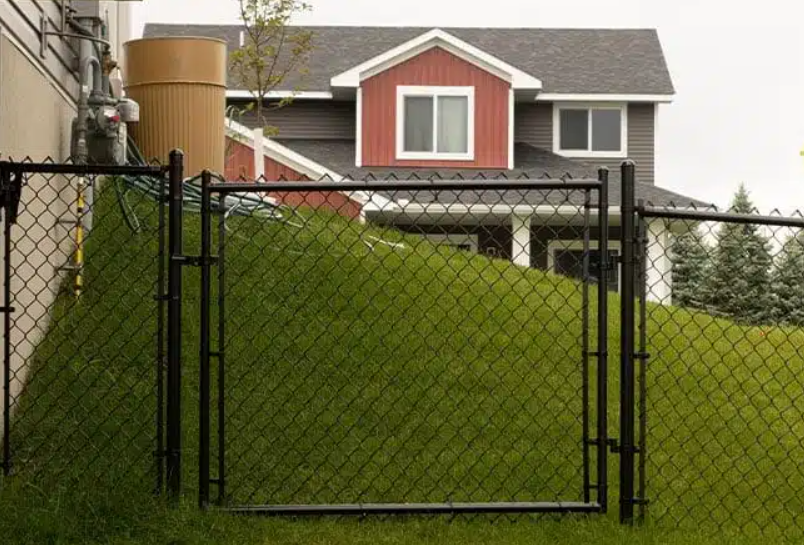
Looking back from the perspective of human civilization, barbed wire fences have evolved from simple pasture separation tools to complex spatial political symbols. It is not only a product of rational computation in the process of modernity, but also carries humanity's eternal questioning of security, privacy, and freedom. When we see the faint iron wire outlines in the city skyline, we not only see physical boundaries, but also the eternal efforts of humans to constantly negotiate and adjust their own positions in space. This effort contains both the pursuit of order and the impulse to break through boundaries - just like barbed wire itself, it is both a limitation and a possibility of connection.


