
- All
- Product Name
- Product Keyword
- Product Model
- Product Summary
- Product Description
- Multi Field Search
English




| Quantity: | |
|---|---|


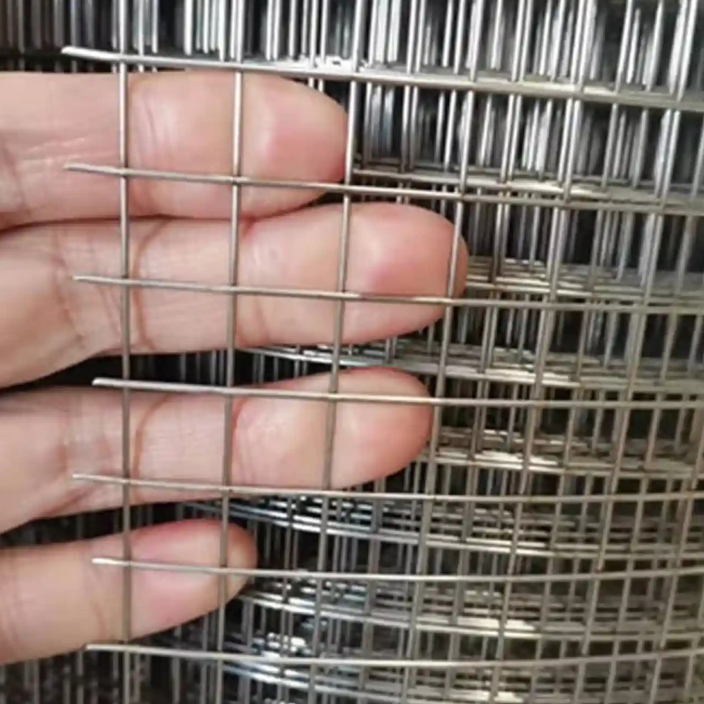
Reinforcing welded steel mesh, also known as welded wire fabric or welded reinforcement mesh, serves as a prefabricated reinforcement solution for concrete structures in road construction projects. Manufactured by spot-welding longitudinal and transverse steel wires at right angles, this product forms a grid pattern that distributes loads evenly across concrete surfaces. The prefabricated nature of welded steel mesh reduces on-site labor requirements compared to traditional hand-tied rebar methods.
In road pavement applications, reinforcing welded steel mesh plays a critical role in controlling cracking caused by temperature changes, traffic loads, and concrete shrinkage. The mesh structure distributes concentrated wheel loads across a wider area of the concrete slab, reducing stress concentrations that can lead to premature pavement failure. When properly positioned within the concrete slab, the mesh enhances the tensile strength of the pavement and extends its service life under repeated traffic loading.
Road construction projects that utilize welded reinforcement mesh include highway pavements, airport runways, parking lots, industrial floors, and bridge deck overlays. Each application requires specific mesh specifications based on design loads, slab thickness, and environmental conditions.

Parameter | Specification Range | Notes |
|---|---|---|
Wire Diameter | 2.5 mm - 12 mm | Common sizes: 3 mm, 4 mm, 5 mm, 6 mm, 8 mm, 10 mm |
Mesh Opening Size | 50 mm × 50 mm to 300 mm × 300 mm | Standard sizes: 100 mm × 100 mm, 150 mm × 150 mm, 200 mm × 200 mm |
Sheet Width | 1.0 m - 2.5 m | Standard width: 2.4 m for road applications |
Sheet Length | 2.0 m - 6.0 m | Standard length: 4.8 m, 6.0 m |
Welding Point Strength | ≥ 80 N/mm² | Tested per ASTM A185/A185M standard |
Yield Strength (Grade 500) | 500 MPa minimum | Conforms to AS/NZS 4671 requirements |
Yield Strength (Grade 400) | 400 MPa minimum | Suitable for light to medium traffic roads |
Tensile Strength | 550 MPa minimum | For Grade 500 reinforcement |
Elongation | ≥ 8% | Measured at fracture |
Standard mesh sheet sizes for road construction include 2.4 m × 4.8 m and 2.4 m × 6.0 m, with custom dimensions available based on project requirements. The mesh is typically supplied in flat sheet form for road applications, though rolled formats are available for specific installation methods.
Reinforcing welded steel mesh for road construction is manufactured using low-carbon steel wire or hot-rolled ribbed steel bars that meet specific industry standards. Common material grades include:
Grade 400 (HRB400): Hot-rolled ribbed bars with 400 MPa minimum yield strength, suitable for municipal roads and parking areas with medium traffic volumes.
Grade 500 (HRB500): High-strength ribbed bars with 500 MPa minimum yield strength, specified for highway pavements, airport runways, and heavy industrial floors.
Grade 300 (SL mesh): Plain or deformed wire with 300 MPa minimum yield strength, used in residential streets and light-duty applications.
All raw materials are sourced from steel mills with ISO 9001 certification and are accompanied by mill test reports documenting chemical composition and mechanical properties.
The manufacturing process employs automated resistance spot welding machines that fuse intersecting wires through controlled electrical current and pressure. Key process parameters include:
Welding current: calibrated based on wire diameter and material grade
Welding pressure: adjusted to ensure complete fusion without excessive material deformation
Welding time: typically 0.1-0.5 seconds per intersection, depending on wire size
Quality control procedures include:
Visual inspection of every sheet for missing welds, misalignment, and surface defects
Tensile testing of weld joints at a rate of one sample per 500 sheets
Dimensional verification of mesh openings and overall sheet dimensions
Bend testing to verify ductility and weld integrity
Each production batch is assigned a unique identification number, allowing full traceability from raw material to finished product.
In highway construction, reinforcing welded steel mesh is used in rigid concrete pavements to control transverse and longitudinal cracking. The mesh is typically placed at mid-depth or slightly above the center of the concrete slab, with concrete cover ranging from 50 mm to 75 mm depending on design specifications.
For highway projects with design speeds of 100 km/h or higher, Grade 500 mesh with 8 mm to 10 mm wire diameter is commonly specified. Mesh openings of 150 mm × 150 mm or 200 mm × 200 mm provide adequate reinforcement while maintaining concrete flowability during placement.
Airport pavements subject to heavy aircraft wheel loads require higher strength reinforcement. Grade 500 welded steel mesh with wire diameters of 10 mm to 12 mm is typically used in runway and taxiway construction. Closer mesh spacing of 100 mm × 100 mm provides enhanced crack control under concentrated aircraft loads.
Apron areas, which experience slower-moving but heavier loads, often utilize double layers of reinforcement mesh to handle both flexural and shear stresses.
Municipal road projects, including urban streets, residential developments, and industrial access roads, typically use Grade 400 welded mesh with 5 mm to 8 mm wire diameter. Mesh openings of 150 mm × 200 mm or 200 mm × 200 mm balance reinforcement effectiveness with material cost.
For bridge deck applications, welded reinforcement mesh is used in conjunction with epoxy-coated or galvanized wire to provide enhanced corrosion resistance in de-icing salt environments.
Beyond standard sheet sizes, custom dimensions can be manufactured to match specific project requirements. Customization options include:
Non-standard sheet widths from 0.5 m to 3.0 m
Custom sheet lengths up to 12 m for reduced lap joints
Rectangular mesh openings (e.g., 100 mm × 200 mm, 150 mm × 300 mm) for directional reinforcement
Variable wire diameters in longitudinal and transverse directions
Custom mesh panels can be pre-cut to fit specific slab dimensions, reducing on-site cutting time and material waste.
For projects requiring enhanced durability in corrosive environments, several surface treatment options are available:
Hot-dip galvanizing: Applied after welding, providing zinc coating thickness of 85 μm to 150 μm. Suitable for coastal areas and structures exposed to moisture.
Epoxy coating: Fusion-bonded epoxy coating with 300 μm to 500 μm thickness, specified for bridge decks and roadways subject to de-icing salts.
Galvanized + PVC coating: Double-layer protection for extreme corrosive environments, with PVC coating thickness of 0.5 mm to 1.0 mm.
Each surface treatment option is tested for adhesion, thickness uniformity, and corrosion resistance according to relevant industry standards.
Reinforcing welded steel mesh sheets are packaged to prevent damage during transit and facilitate on-site handling. Standard packaging includes:
Flat sheets stacked on wooden pallets with steel strapping
Protective corner pieces to prevent edge damage
Waterproof wrapping for outdoor storage
Labeling with specification details, batch number, and quantity
For container shipments, pallets are sized to optimize 20-foot or 40-foot container utilization. A standard 20-foot container can hold approximately 15-20 metric tons of welded mesh, depending on sheet dimensions and wire diameter.
Production capacity for reinforcing welded steel mesh reaches 5,000 metric tons per month across multiple automated production lines. Standard lead times are:
Standard specifications: 7-10 working days
Custom specifications: 10-15 working days
Large volume orders (500+ tons): 15-25 working days
Expedited production can be arranged for time-sensitive projects with prior notification.
Project support services include:
Technical consultation during the design phase to select appropriate mesh specifications
Quantity calculation based on pavement dimensions and lap requirements
On-site installation guidance for large-scale projects
Supply of test reports and certification documentation
Reinforcing welded steel mesh production adheres to international and regional standards, including:
ASTM A185/A185M: Standard Specification for Welded Steel Wire Fabric for Concrete Reinforcement (United States)
BS 4483: Steel Fabric for the Reinforcement of Concrete (United Kingdom)
AS/NZS 4671: Steel Reinforcing Materials (Australia/New Zealand)
ISO 9001:2015: Quality Management System Certification
CE Marking: Conformity with European Union construction product regulations
Third-party inspection services from SGS, BV, or TÜV can be arranged upon request, with inspection reports provided before shipment.
Reinforcing welded steel mesh can be manufactured to meet various international standards including ASTM A185/A185M, BS 4483, AS/NZS 4671, and EN 10080. The specific standard depends on the project location and engineering requirements. Each standard defines different requirements for material properties, weld strength, dimensional tolerances, and testing methods.
The quantity of reinforcing welded steel mesh is calculated based on pavement area, mesh sheet dimensions, and lap requirements. The formula is:
Number of sheets = (Total pavement area / Area per sheet) × (1 + lap factor)
Lap factors typically range from 10% to 15%, depending on mesh size and design specifications. For projects with irregular shapes, additional allowance of 5% to 10% is recommended for cutting waste. Technical support teams can provide detailed quantity calculations based on project drawings.
The minimum order quantity for custom-sized reinforcing welded steel mesh is typically 5 metric tons per specification. For standard sizes, smaller orders can be accommodated from existing inventory. Trial orders for sample testing are available with quantities as low as 10 sheets, depending on current production schedules.


