
- All
- Product Name
- Product Keyword
- Product Model
- Product Summary
- Product Description
- Multi Field Search
English


Views: 0 Author: Site Editor Publish Time: 2026-06-11 Origin: Site


Selecting the right industrial flooring or pathway material is a critical safety and structural integrity decision. It is never just a simple commodity purchase. Engineers and facility managers face severe consequences if specified materials fail under pressure. We define Steel Grating as a rigid framework of parallel, cross-intersecting bars. Its primary function maximizes the strength-to-weight ratio while allowing light, air, and liquids to pass freely. Choosing incorrectly leads to structural fatigue, safety hazards, and premature replacement.
This guide provides project managers, engineers, and procurement teams a strict evaluation framework. You will learn to assess materials based on load requirements, environmental realities, and compliance standards. We will explore manufacturing differences, material types, and essential installation practices. By the end of this article, you will have a clear roadmap for specifying the exact industrial grating your project demands.
Load Dictates Design: Selection must begin with distinguishing between uniform loads (pedestrian) and concentrated loads (vehicular/machinery).
Material Matches Environment: Standard carbon steel requires protective finishes; Hot-Dip Galvanized Steel Grating is the industrial baseline, while alternatives like Fiberglass Grating are reserved for highly corrosive or non-conductive zones.
Compliance is Non-Negotiable: Specifying grating requires adherence to structural deflection limits (ANSI/NAAMM/DIN) and localized safety codes (e.g., ADA compliance for closed-mesh gaps).
Installation Details Matter: Long-term failure often stems from incorrect banding choices or improper attachment hardware, not the grating itself.
Manufacturing processes fundamentally alter how grating behaves under stress. You must align the fabrication method with your specific application requirements. Different techniques yield varying levels of rigidity, aesthetic appeal, and structural longevity.
Welded bar construction remains the industry standard for heavy-duty applications. Manufacturers electro-forge cross bars directly into the bearing bars. This intense heat and pressure create a permanent metallurgical bond. The resulting rigid, single-piece construction is ideal for continuous heavy traffic. You will commonly see this type used on industrial mezzanines, catwalks, and factory floors. The structural integrity holds up flawlessly against constant vibration and dynamic stress.
Not every project requires welding. Press-locked and swage-locked variants utilize extreme hydraulic pressure to lock bars together. This process requires zero heat. It provides a cleaner, smoother aesthetic. Furthermore, these methods allow for much closer bar spacing. Architects frequently specify these options for specialized pedestrian zones or aesthetic building facades.
Press-Locked: Deep cross bars interlock with bearing bars under immense pressure.
Swage-Locked: Tubular cross bars expand inside punched bearing bars. This permanently deforms the tube to secure the grid.
You do not have to sacrifice strength to achieve good ventilation. Specific grating configurations can achieve up to 80% open area. This superior void space facilitates massive airflow and rapid drainage. Engineers leverage this high open area to reduce wind loads on exterior structural platforms. The key lies in selecting the proper bearing bar depth and thickness to maintain load capacity.
Common Mistake: Specifying excessively tight mesh patterns in industrial plants. Tight patterns trap debris and impede essential fluid runoff without significantly boosting structural strength.
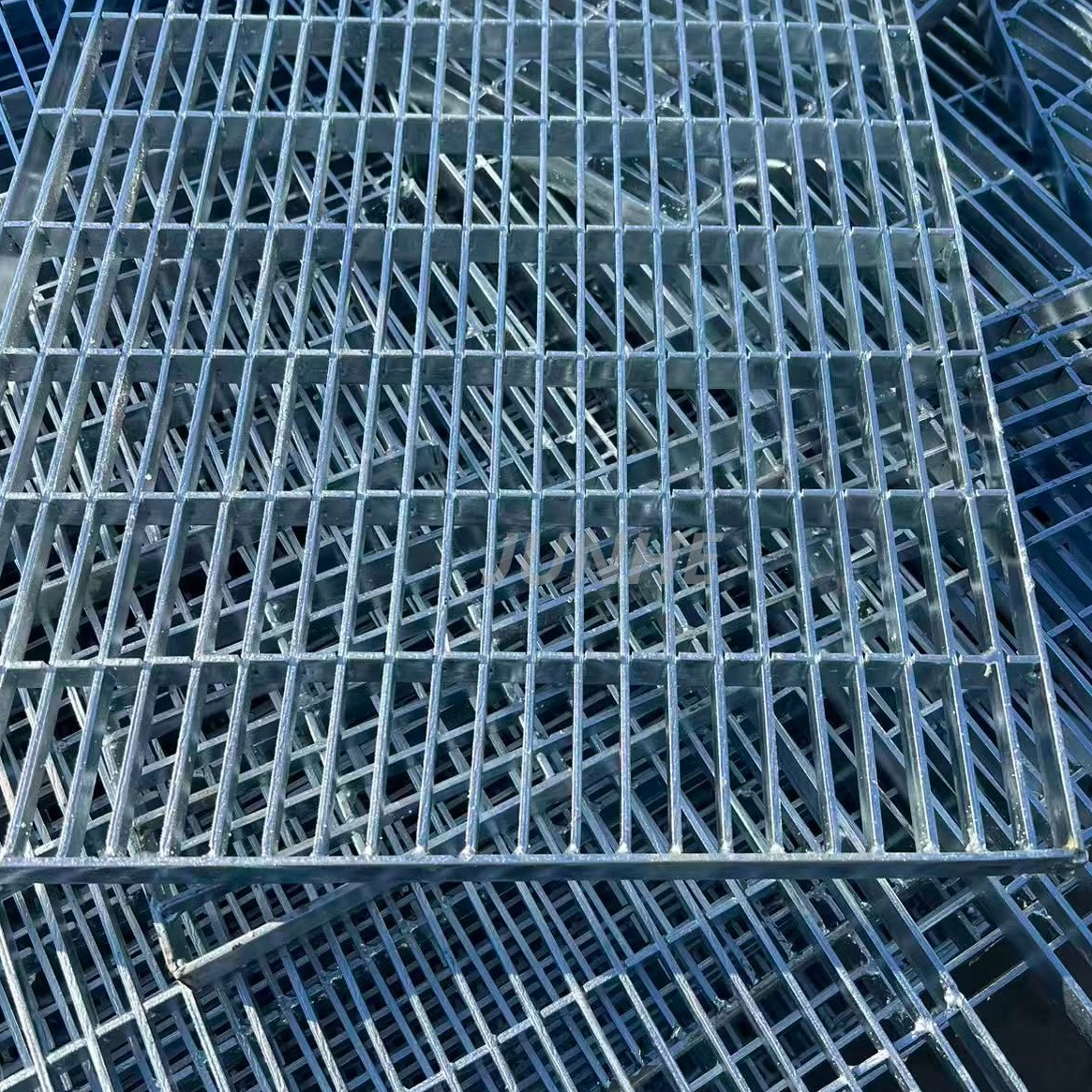
The surface profile and overall design dictate how grating interacts with foot traffic, vehicles, and the surrounding environment. Matching the profile to the application ensures long-term safety.
Smooth surface profiles work best for general-purpose walkways. We recommend them where slip risks remain minimal and debris accumulation is low. They provide excellent walking comfort for standard footwear. You will find smooth profiles across climate-controlled warehouses, interior catwalks, and standard commercial pathways.
When platforms face oil, grease, or heavy moisture, extreme slip resistance becomes mandatory. Serrated grating features cold-stamped, jagged bearing bars. These aggressive footholds bite into boots, preventing catastrophic slips. They are essential for offshore rigs, chemical wash-down areas, and outdoor platforms exposed to ice and snow. The serrations are cut into the load-bearing bars, meaning they do not compromise the overall grid strength.
Trench applications demand specifically engineered solutions. Drainage Grating prevents liquid pooling and facilitates rapid runoff in industrial setups. You must pair these grates with specialized "trench banding." Trench banding elevates the edge bars slightly above the bearing bars. This small modification ensures fluids do not pool along the trench edges. Municipal water treatment facilities and food processing plants rely heavily on these optimized drainage grids.
Pedestrian profiles cannot survive vehicular impact. Heavy-duty grating features significantly thicker and deeper bearing bars. Manufacturers engineer these grids to handle massive concentrated static and dynamic loads. Examples include forklift traffic, heavy truck weigh stations, or even airplane landing gear. The cross bars are also proportionally thicker to prevent the bearing bars from rolling under immense sheer force.
Raw steel deteriorates rapidly when exposed to oxygen and moisture. Selecting the right base material and protective finish prevents catastrophic structural degradation.
Standard carbon steel offers the most cost-effective base material. However, it requires a robust protective coating. Hot-Dip Galvanized Steel Grating serves as the undisputed default for outdoor use. The galvanizing process immerses the steel in molten zinc. This creates a powerful metallurgical bond. The zinc coating acts sacrificially. It prevents rust propagation even if the surface gets superficially scratched by heavy equipment.
Stainless steel requires a high initial investment. Yet, it becomes an absolute necessity in specific environments. Food processing facilities, chemical plants, and sterile pharmaceutical environments demand it. These locations require frequent caustic washdowns that would quickly strip standard galvanization. Stainless alloys (like 304 or 316L) resist harsh sanitizing chemicals and prevent bacterial harbor points.
You must know when to step away from steel entirely. Fiber Reinforced Plastic (FRP) is the necessary choice under highly specific conditions. We specify Fiberglass Grating when facing extreme chemical corrosion. It also serves as the mandatory safety standard when non-sparking, non-magnetic, or non-conductive properties are strictly required by fire codes.
Material Selection Comparison Chart | |||
Material Type | Primary Benefit | Ideal Environment | Limitation |
|---|---|---|---|
Galvanized Carbon Steel | Maximum strength-to-weight ratio | Outdoor industrial, heavy vehicular | Vulnerable to highly acidic chemicals |
Stainless Steel (316L) | Superior hygiene and caustic resistance | Food processing, pharmaceutical | High initial material cost |
Fiberglass (FRP) | Non-conductive, extreme corrosion resistance | Electrical substations, offshore rigs | Lower impact resistance than steel |
Guessing load capacities leads to structural disasters. You must adhere to stringent engineering tolerances and localized safety compliance codes. Specifying grating requires precise mathematical calculations, not estimates.
Engineering standards differentiate strictly between two load types. You must specify the correct one based on actual site usage.
Uniform Loads: We measure these in pounds per square foot (lbs/sq ft). They represent weight evenly distributed across the entire panel. Foot traffic on a catwalk represents a classic uniform load.
Concentrated Loads: We measure these in pounds per wheel or point impact. They represent immense pressure isolated to a tiny surface area. A solid-tire forklift braking on a grate represents a severe concentrated load.
Best Practice: Always design for the heaviest potential concentrated load if vehicles occasionally access pedestrian zones.
Deflection measures how much a panel bends under weight. Industry frameworks (like ANSI, NAAMM, and DIN) mandate strict deflection limits. For pedestrian grating, standards restrict deflection to a maximum of 1/4 inch. This prevents walkers from feeling a disconcerting "bounce" underfoot. Conversely, vehicular grating is capped strictly at 1/8 inch (or L/400). Exceeding this limit causes metal fatigue, weld cracking, and eventual catastrophic failure.
Safety codes govern mesh spacing in public areas. You must comply with the Americans with Disabilities Act (ADA) when designing accessible pathways. ADA regulations require closed-mesh grating. The gaps must be narrow enough to prevent high heels, walking canes, or wheelchair wheels from getting trapped. Typically, this means the clear opening between bearing bars cannot exceed 1/2 inch in the dominant direction of travel.
Excellent grating fails if you install it poorly. Long-term structural integrity relies heavily on proper edge finishing and correct fastening hardware.
Unfinished grating edges are structurally weak and hazardous to handle. Banding welds a solid metal bar across the open ends of the bearing bars. It serves two distinct purposes.
Trim Banding: Used primarily for edge safety and aesthetic finishing. It prevents clothing snags and improves the visual lines of architectural platforms.
Load Banding: Used to transfer structural stress across unsupported cutouts. If a pipe requires a circular cutout in the panel, load banding redistributes the weight safely around the hole.
Evaluating fastening methods is critical for longevity. We strongly recommend avoiding direct field welding whenever possible. Welding burns off galvanization, immediately introducing rust vulnerabilities. Instead, rely on mechanical fasteners based on environmental vibration levels.
Standard Fastener Types | ||
Fastener Type | Mechanism | Best Use Case |
|---|---|---|
Saddle Clips | Bridges two bearing bars and bolts to support | Standard pedestrian walkways |
G-Clips | Friction-based, weld-free underside clamp | Industrial floors preventing hot-work (welding) |
Counter Bore Anchor Tabs | Countersunk bolt directly into structural steel | High-vibration zones, heavy vehicular traffic |
Installers often need to cut panels on-site to fit around unexpected obstacles. We warn strictly against cutting galvanized panels without proper post-cut treatment. Exposing raw steel introduces premature failure points. You must seal all field cuts immediately using a high-quality zinc-rich cold galvanizing compound. Neglecting this simple step voids warranties and accelerates corrosion.
Specifying industrial flooring requires a rigorous, step-by-step evaluation. First, calculate your load type to determine necessary bar thickness. Second, assess the environmental corrosivity to choose between standard steel, stainless, or fiberglass. Third, verify local compliance and ADA mesh spacing requirements. Finally, specify appropriate banding and mechanical hardware to ensure secure installation.
Never rely on guesswork for industrial safety. We strongly encourage buyers to consult directly with a structural engineer or the manufacturer. Run specific span and deflection calculations before finalizing any procurement orders.
A: Expanded metal is manufactured by slitting and stretching sheet metal to form a diamond pattern. It is lightweight and suitable for lighter loads or security fencing. Bar grating is assembled from individual, thick structural bars welded or pressed together. It is engineered specifically for heavy, continuous pedestrian or vehicular loads.
A: Load capacity depends on several structural factors. Engineers calculate it based on the thickness and depth of the main bearing bars. They also factor in the distance between structural supports (the span) and the material's yield strength. Shorter spans and deeper bars exponentially increase the load capacity.
A: It depends on the severity. You can repair minor surface scratches using zinc-rich cold galvanizing paints to prevent rust. However, you cannot safely repair sections that have suffered structural bending, severe deflection, or cracked welds. You must completely replace deformed panels to restore original load safety standards.


