Quarry-Grade Corrosion-Resistant Manganese Steel Screen Mesh
Description
Durability:
it's 3 - 5 times more wear - resistant than regular steel meshes
Strong Corrosion Resistance:
After 1000 - hour salt - spray tests, it shows no rust, outperforming many metal meshes and extending
It's applicable across mining, construction, and food processing.
Mesh Sizes:
Available in a wide range, from 0.1mm aperture for fine screening to 50mm for coarse separation.
Material Composition:
Composed mainly of high - grade manganese steel, with manganese content typically ranging from 11% - 14%.
Tensile Strength:
Exhibits a high tensile strength of 800 - 1200 MPa.
Impact Resistance:
In standardized impact tests, it can withstand impacts of up to 20 J without deformation.
Corrosion Resistance Grade:
After 1000 - hour salt - spray tests, it shows no signs of rust or degradation.
FAQ:
Q1: Why is manganese steel suitable for use in screens?
A1: Manganese steel has high wear resistance and toughness. Its alloy composition contains 11%-14% manganese, enabling it to withstand harsh environments, making it an ideal material for screens in various industries.
Q2: What is the typical service life of manganese steel screens?
A2: This depends on the application. In high-intensity environments such as mining, its service life can reach 6-12 months. In lower-intensity applications such as food processing, its durability allows for a service life of 1-2 years.
Q3: Are the screens easy to clean?
A3: Yes. For most applications, dirt can be removed simply by rinsing with water or gently brushing. For stubborn stains, a mild detergent can be used without affecting the integrity of the screen.
Q4: What customized services do you offer?
A4: We support full customization including size, material, surface treatment, load-bearing design, cutting, welding and processing. All products can be produced according to your drawings and project requirements.
Q5: How can I contact you for inquiry and order?
A5: You can reach us directly via:
Email: 17331466463@steelwiremeshfactory.com; 17331468011@steelwiremeshfactory.com
WhatsApp: +86 17331466463; +86 17331468011
Advantages
1. Superior Durability
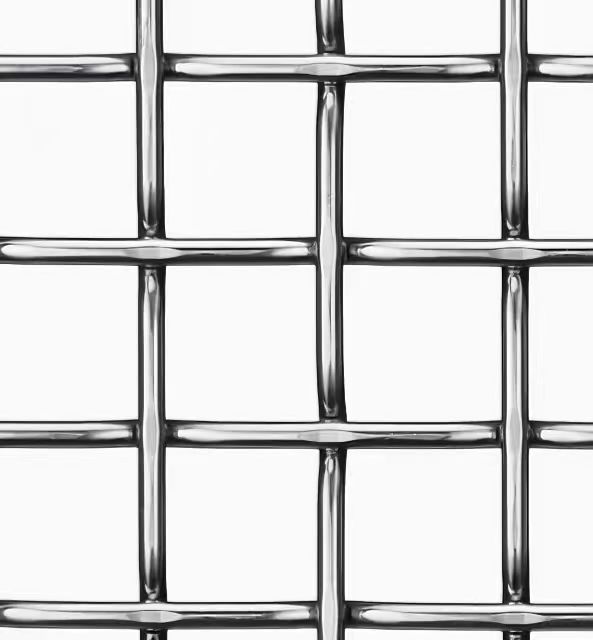
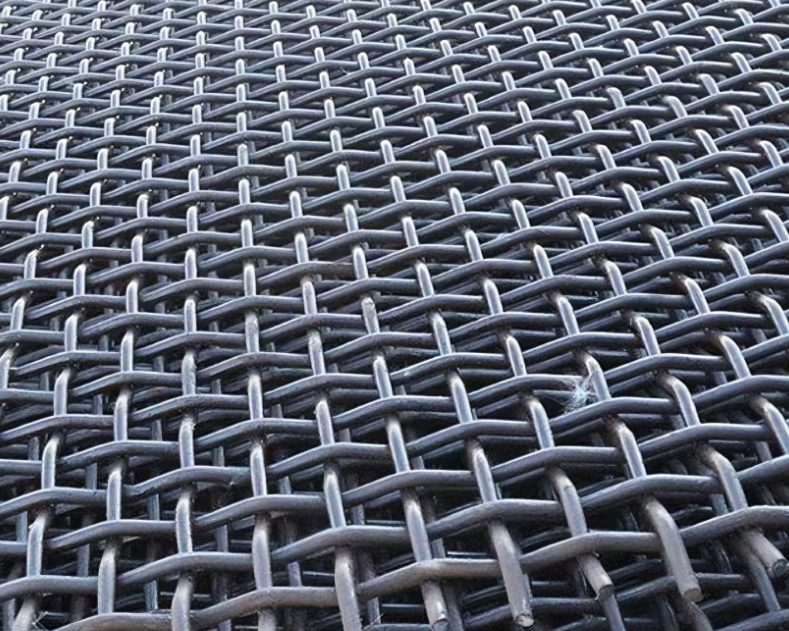
Crafted from high-grade manganese steel, the manganese steel screen mesh is a robust and long-lasting product with exceptional wear resistance, making it well-suited for harsh operating environments. It is widely utilized in mining, construction, and industrial screening for efficient size-based material separation. Its sturdy structure can bear heavy loads and sustained vibration, and it is available in various mesh sizes to meet diverse screening requirements, positioning it as a reliable choice for industries in need of durable, high-performance screening solutions.
Thanks to its unique alloy composition, manganese steel screen mesh delivers remarkable durability. Testing demonstrates it is 3-5 times more wear-resistant than conventional steel meshes, making it ideal for high-friction sectors such as mining.
2. High-Efficiency Screening
With precisely calibrated mesh sizing, this screen mesh enables highly efficient material screening. For instance, in sand screening applications, it achieves a separation accuracy of up to 95%, reducing operational time and boosting overall productivity.
3. Excellent Corrosion Resistance
Boasting strong corrosion resistance, the mesh shows no signs of rust after undergoing a 1000-hour salt spray test—outperforming many other metal meshes and extending its service life in various industrial settings.
4. Versatile Applications
It finds application across mining, construction, and food processing industries. In mining, it separates ores from gangue; in construction, it sifts aggregates like sand and gravel; in food processing, it sorts grains and removes impurities.
5. Customization Options
We offer tailored manganese steel screen mesh solutions, customizing mesh sizes, shapes, and additional features to address specific customer requirements.
Parameter Details
Mesh Sizes
Available in an extensive range, with apertures from 0.1mm (for fine screening tasks) to 50mm (for coarse material separation). This allows for precise sorting of diverse materials, from fine chemical powders to large construction aggregates.
Material Composition
Primarily composed of premium manganese steel with a manganese content typically ranging from 11% to 14%. This specific alloy formulation endows the mesh with outstanding wear resistance and toughness, ensuring reliable performance in harsh working conditions.
Tensile Strength
It exhibits a high tensile strength of 800-1200 MPa, enabling it to withstand heavy loads during operation—such as in continuous mining conveyor systems processing large material volumes.
Impact Resistance
The mesh can endure substantial impact forces, withstanding impacts of up to 20 J without deformation in standardized tests. This makes it suitable for applications prone to sudden impacts, like vibrating screening machines in the mining industry.
Corrosion Resistance Grade
Rated as highly corrosion-resistant, it shows no rust or degradation after a 1000-hour salt spray test. This characteristic is critical for use in humid or corrosive environments, such as coastal construction sites and chemical processing plants.
Applications of Manganese Steel Screen Mesh
Mining Industry
In mining operations, the mesh is used to separate ores from gangue. Its robust construction resists abrasion from ore materials; for example, in gold mines, it sizes ore particles to facilitate efficient extraction.
Construction Industry
Within the construction sector, it sifts aggregates (sand, gravel, etc.), ensuring the correct particle sizes for high-quality concrete mixing.
Food Processing
Food processing plants utilize the mesh to sift grains and flour, with fine-meshed variants removing impurities to uphold food safety standards.
Chemical Industry
In chemical manufacturing, it screens powders and granules, classifying products by size to ensure consistent quality—such as in fertilizer production processes.
Recycling Plants
Recycling facilities rely on the mesh to separate metals, plastics, and glass by size, significantly improving recycling efficiency.


