
- All
- Product Name
- Product Keyword
- Product Model
- Product Summary
- Product Description
- Multi Field Search
English


Views: 0 Author: Site Editor Publish Time: 2026-08-24 Origin: Site


Joining dissimilar metal thicknesses presents a massive engineering hurdle. You face severe thermal asymmetry when attaching delicate screen materials to heavy structural frames. The heat required to melt the thick base material easily destroys the fragile strands. Operators often experience catastrophic failure modes on the shop floor. They either vaporize the strands entirely, known as burn-through, or fail to penetrate the thick base plate, causing a cold lap. These defects ruin product integrity. They compromise industrial filtration devices, machine safety guarding, and architectural designs.
We will explore an evidence-based framework for tackling this exact challenge. You will discover how to select the right process, tooling, and parameters for structural applications. Our guide empowers you to master this delicate fabrication process reliably. We provide actionable steps to balance heat inputs and preserve material strength. You will learn to recognize when to strike an arc and when to use alternative fastening methods.
Successful thin-to-thick welding requires directing the primary arc or heat source at the thicker material and washing the puddle over the fine mesh.
Resistance (spot) welding and pulse TIG are the most reliable methods for minimizing heat-affected zones (HAZ) and distortion.
Proper fit-up and the use of copper chill bars are mandatory to prevent fine mesh from melting prematurely.
In scenarios with extreme thickness ratios or incompatible alloys, mechanical fastening or specialized binding often outperforms welding.
Fabricators must understand the distinct behavior of different metal masses under intense heat. Mastering this transition prevents catastrophic joint failure.
Thick metal plates act as massive heat sinks. They possess significant thermal mass. These plates pull thermal energy away from the weld zone rapidly. They demand high amperage to reach a fluid state. Conversely, incredibly thin strands require incredibly low heat input to survive. They lack the mass to absorb or dissipate energy. Exposing these delicate strands to direct, high-amperage arcs causes them to vaporize instantly. This extreme difference in heat capacity defines the core challenge of thermal asymmetry.
Applying heat to dissimilar thicknesses introduces several critical risks. You must evaluate these threats before striking an arc.
Distortion: Intense heat creates localized expansion in the heavy plate. As the assembly cools, it contracts forcefully. This thermal cycling causes warpage in the rigid frame. It also creates severe tension, often tearing the fragile strands away from the joint.
Metallurgical compromise: Excessive heat alters the internal grain structure of the metal. Carbide precipitation frequently occurs in stainless steel components. This phenomenon robs the boundary layers of chromium. The resulting metallurgical imbalance leads to premature rust and catastrophic corrosion in the field.
You need clear benchmarks to evaluate a completed joint. A passing weld for this specific application must meet strict visual and mechanical standards. Assess your work against these specific criteria:
Zero wire vaporization along the entire length of the seam.
Adequate, verifiable penetration deep into the thick base plate.
Consistent puddle tie-in capturing the strand ends seamlessly.
Maintained surface tension across the screen without sagging or tearing.
Absence of sharp edges, excessive spatter, or hazardous burrs.
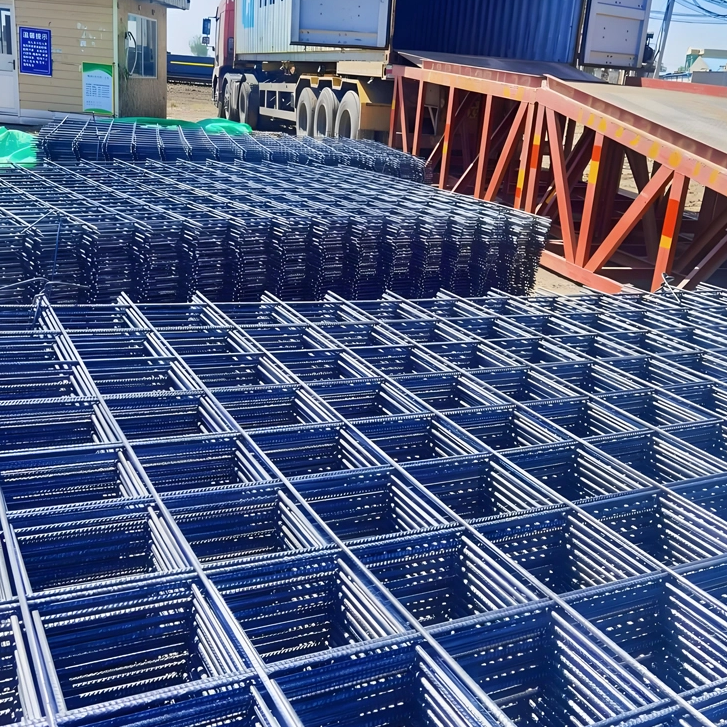
Choosing the correct equipment dictates your success rate. When you need to weld fine wire mesh, evaluating your fabrication methods is the first critical step. Different methods offer distinct advantages based on production scalability and operator skill.
Welding Process Comparison for Dissimilar Metal Thicknesses
Process | Heat Control | Operator Skill Needed | Best Application |
|---|---|---|---|
Resistance (Spot) | Excellent (Localized) | Low | High-volume flat panels |
Pulse TIG (GTAW) | Ultimate Precision | Very High | Complex geometries, round rods |
MIG (GMAW) | Poor to Moderate | Moderate | Heavy industrial frames (10-count or larger) |
Laser Beam (LBW) | Microscopic HAZ | High (Programming) | Flawless aesthetic requirements |
Resistance welding relies on electrical current passing through compressed metals. The resistance generates localized heat, melting the components together instantly.
Pros: This process delivers deep, localized fusion. It offers incredibly fast cycle times. The equipment requires minimal operator finesse once properly calibrated. It remains the best choice for high-volume production runs.
Cons: The physical throat depth of the spot welder limits your reach. You cannot easily access the center of large panels. It is also not ideal for applications requiring watertight seals or continuous structural seams.
Tungsten Inert Gas welding uses a non-consumable electrode. Adding pulse capability allows the machine to alternate between high and low amperages rapidly.
Pros: Pulse TIG offers ultimate control over heat input. The alternating pulse settings allow the puddle to freeze slightly between high-amp bursts. This rapid freezing prevents burn-through. It is ideal when attaching flexible screens to complex geometries like round rods or cylinders.
Cons: The process is extremely slow. It demands highly skilled, experienced operators. These factors drive up labor costs significantly during large fabrication projects.
Metal Inert Gas welding feeds a continuous solid wire through the welding gun. Short-circuit transfer creates a rapid series of electrical shorts to melt the wire.
Pros: MIG welding provides fast deposition rates. The equipment is highly accessible and common in most fabrication shops.
Cons: You face a high risk of burn-through. Excessive spatter frequently clogs the small openings in the screen. Experts generally do not recommend standard MIG for materials finer than 10-count unless you utilize specialized pulsed-MIG equipment.
Laser welding uses a focused beam of light to melt the target materials. It represents the pinnacle of precision joining technology.
Pros: Lasers produce a microscopic heat-affected zone. They deliver flawless aesthetics and require almost zero post-weld cleanup.
Cons: The prohibitive capital expenditure limits accessibility. The machinery costs hundreds of thousands of dollars. Furthermore, the process requires flawless, zero-gap fit-up to function correctly.
Preparation dictates the outcome of delicate fabrication tasks. Proper clamping and thermal management determine whether the joint holds or fails.
The delicate strands must intimately touch the thicker metal base. You cannot allow any gaps between the components. Any air gap acts as a thermal insulator. Air prevents heat from transferring into the massive base plate. When an arc strikes an isolated strand, the wire absorbs the full thermal load and instantly melts. Use heavy clamps, custom jigs, or weights to force the materials together perfectly.
You must actively pull heat away from the fragile components. We strongly recommend backing the joint with highly conductive materials. Place copper blocks directly underneath the weld zone. Aluminum backing bars also perform exceptionally well. These chill bars absorb the excess thermal energy before it can travel down the fragile strands. This technique drastically reduces the heat-affected zone and prevents severe warpage.
Operator technique plays a massive role in heat management. You must control the arc direction strictly.
Standard operating procedure: Strike the arc exclusively on the thick base metal. Never point the tungsten directly at the thin strands.
Puddle manipulation: Keep the heat focused on the heavy plate until a fluid puddle forms.
Washing technique: Once established, briefly wash or step the puddle onto the delicate edges. Immediately return the arc focus to the heavy plate. This swift, deliberate movement captures the thin material without vaporizing it.
Choosing the right filler rod prevents the joint from freezing prematurely. Use smaller diameter filler rods. Sizes like 0.035" or 0.045" work best. These thin rods melt quickly at much lower amperages. Heavy filler rods require too much heat to melt. They also chill the puddle excessively when introduced. Using small-diameter filler ensures the puddle remains fluid while keeping the overall heat input low.
Different alloys behave unpredictably under intense thermal stress. You must adjust your strategy based on the specific metallurgy of your components. A premium wire mesh requires tailored techniques to maintain its structural integrity.
Austenitic stainless steel presents unique thermal challenges. It features a remarkably high thermal expansion rate alongside very low thermal conductivity. Heat concentrates intensely at the joint rather than dissipating. The localized heat causes extreme expansion, leading to severe warpage. You must emphasize skip-welding techniques. Stagger your welds across the panel. Weld one inch, then move to the opposite side of the frame. This distributes the thermal stress evenly and prevents severe distortion.
Copper behaves completely differently than steel. It possesses extreme thermal conductivity. Heat rushes away from the weld zone almost instantly. This characteristic requires significantly higher heat input overall just to establish a puddle. Pushing high amperage makes the thin-to-thick transition exceptionally volatile. You must pre-heat the thicker base metal. Pre-heating reduces the temperature differential and lowers the required peak amperage, protecting the delicate copper strands.
Galvanized materials introduce hazardous complications. The protective zinc coating melts and vaporizes at temperatures far below the melting point of steel. This zinc off-gassing causes severe porosity within the weld puddle, weakening the joint. It also releases highly toxic zinc oxide fumes. You must mandate strict surface preparation. Grind the thick base metal entirely clean. Chemically strip the zinc from the weld zone on the delicate strands prior to striking an arc. Never weld over intact galvanization.
Expert fabricators know when to abandon the torch. Sometimes welding represents the wrong operational choice. Thermal stress or metallurgical incompatibility can ruin certain assemblies. You must evaluate alternative fastening strategies for challenging environments.
Mechanical clamping provides a robust, heat-free solution. Discuss the use of flat bar clamp strips. You lay the screen flat against the frame, place a steel flat bar over the edges, and drive screws or rivets through the sandwich into the thick metal. This method proves superior for vibration-heavy environments. Welded wires often suffer fatigue failure near the heat-affected zone when exposed to constant shaking. Clamping distributes the load evenly.
Sheet metal fabrication techniques offer elegant alternatives. Hemming involves bending the heavy base material over the delicate edges. You can crimp the screen securely into a specialized channel, such as U-edging. This approach traps the material physically without introducing any thermal degradation. It produces a clean, architectural finish perfect for decorative panels or safety guards.
Modern chemistry solves complex metallurgical problems. High-strength epoxies perform exceptionally well for applications requiring dissimilar metal joining. For example, attaching an aluminum screen to a carbon steel frame creates a galvanic couple. Moisture will cause the aluminum to corrode rapidly. Industrial adhesives act as a dielectric barrier. They bond the materials aggressively while preventing galvanic corrosion entirely. Adhesives eliminate burn-through risks completely.
Successfully joining fragile screens to heavy structural plates requires strict discipline and precise thermal control. You must select your process based on your production goals and part geometries. Choose resistance welding for flat, high-volume production panels. Choose pulse TIG for specialized, high-precision joints on complex shapes. Opt for mechanical clamping or adhesives if the environment involves heavy vibration or if field-replacement of the screen becomes necessary.
Always validate your approach before committing to a full-scale fabrication run. Recommend consulting with a metallurgical engineer regarding complex alloy combinations. Request weld samples from your supplier to practice your puddle washing techniques. Proper fit-up, disciplined arc direction, and adequate chill bars guarantee a strong, aesthetically pleasing joint.
Assess material mass and prioritize zero-gap fit-up to prevent instant burn-through.
Always direct the primary arc energy into the heavy base plate, not the fragile strands.
Implement copper or aluminum chill bars to extract damaging heat from the joint.
Utilize skip-welding on stainless steel to mitigate its high thermal expansion.
Deploy mechanical fasteners when vibration fatigue threatens heat-affected zones.
A: We strongly advise against using standard flux-core arc welding (FCAW) for this application. Flux-core processes generate excessive heat and aggressive spatter. The high heat input almost guarantees burn-through on fragile strands. Furthermore, chipping the hard slag off delicate wires usually bends or breaks the material, ruining the joint entirely.
A: Start with a low frequency pulse, around 1 to 2 pulses per second (PPS). Set your peak amperage high enough to melt the 1/4-inch plate quickly, but set the background current very low (around 10-15%). This allows the puddle to freeze slightly between pulses, granting you control as you wash the puddle over the fragile stainless strands.
A: Never weld a continuous seam straight across the panel. You must use a skip-welding technique. Place short tack welds spaced several inches apart, constantly moving to opposite sides of the frame to distribute thermal stress. Additionally, clamp heavy copper backing bars tightly against the joint to draw away excess heat rapidly.
A: Yes, it is highly achievable using pulse TIG. The curve makes zero-gap fit-up difficult, so you must use specialized curved clamps or heavy tension to force the materials together. Strike your arc exclusively on the crest of the round rod. Once the puddle forms, gently dab your filler wire and step the heat onto the trapped strands.


