
- All
- Product Name
- Product Keyword
- Product Model
- Product Summary
- Product Description
- Multi Field Search
English


Views: 0 Author: Site Editor Publish Time: 2026-10-02 Origin: Site


Engineering blueprints and supplier quotations frequently use highly condensed nomenclature. Misreading these brief codes easily leads to specification mismatches and severe project delays. You face a major procurement challenge when trying to decipher these shorthand technical descriptions. Incorrectly guessing the physical dimensions compromises structural integrity and heavily inflates your project budgets. Procurement managers must bridge the gap between engineering intent and supplier reality.
This article breaks down the physical dimensions, load implications, and commercial evaluation criteria for 355/30/100 Steel Grating. You will learn exactly how to interpret the numbers to ensure highly accurate procurement. We focus closely on structural tolerances, the true cost drivers hidden in supplier quotes, and strict industry-standard compliance. Understanding this specification empowers you to buy the right material the first time. We want you to guarantee safety for heavy pedestrian traffic across all your industrial applications.
Dimensional Breakdown: "355" denotes a 35×5 bearing bar, while "30/100" indicates the mesh spacing (30mm by 100mm).
Optimal Application: Serves as a standard, high-durability specification for industrial walkways and maintenance platforms requiring moderate-to-heavy pedestrian load capacities.
Safety & Longevity: Often specified as hot-dip galvanized steel grating for corrosion resistance and paired with a serrated profile for wet or oily environments.
Commercial Risk: Quotation variances typically stem from discrepancies between theoretical "black" (uncoated) weight and actual galvanized weight, as well as hidden banding fees.
Decoding the nomenclature helps you avoid costly manufacturing errors. Suppliers use this shorthand to describe the exact physical geometry of the panels. Every number represents a critical structural variable. You must understand these variables to verify engineering compliance.
The "355" component specifically denotes a 35×5 bearing bar. This means the primary load-bearing flat bars measure 35 millimeters in depth and 5 millimeters in thickness. You rely on the 35mm depth to dictate the maximum clear span. Deeper bars resist downward deflection under heavy foot traffic over longer gaps. Structural engineers carefully calculate this depth to prevent bouncing walkways.
The 5mm thickness adds essential lateral stability. Lighter 3mm variants often buckle or twist under dynamic rolling loads. You gain a much higher safety margin by choosing the thicker 5mm profile. It prevents warping during the aggressive hot-dip galvanizing process. This thickness also extends the physical lifespan of the floor in abrasive environments.
The "30/100" portion describes the precise mesh configuration. It specifies a 30/100 steel grating layout. The heavy bearing bars sit 30mm apart, measured center-to-center. The twisted or round cross bars intersect them at 100mm center-to-center intervals. The manufacturing industry often calls this specific layout a Series 30 grating.
You should frame this as the dominant standard for industrial pedestrian traffic. The tight 30mm bearing bar spacing creates a dense walking surface. It balances the open area needed for drainage with robust structural rigidity. Water, debris, and snow easily fall through the rectangular gaps. Meanwhile, the surface remains tight enough to support rolling tool carts and heavy work boots securely.
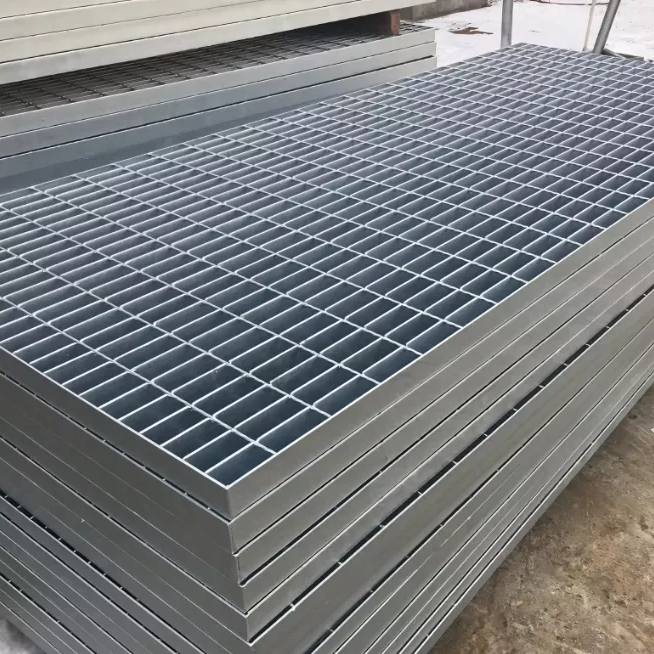
You must match the panel geometry to your specific site conditions. Selecting the right specification prevents premature structural failure. It also prevents extreme over-engineering that wastes project funds.
A 35x5 bar at a 30mm pitch handles significant weight loads. Engineers typically design industrial walkways to support a 5 kPa uniform distributed load (UDL). This specification comfortably exceeds normal pedestrian requirements over a one-meter clear span. Concentrated loads from heavy maintenance trolleys also fare very well. You can roll heavily loaded tool carts across this dense mesh safely.
However, you must clearly recognize the structural limits. It supports heavy pedestrian traffic perfectly. It generally falls short for heavy vehicular traffic. H-20 loads from commercial trucks will quickly crush these panels. You can only support light vehicles if the clear spans are exceptionally short. You should upgrade to much deeper bars, like 50x5 or 60x5, for roadway trenches. Always consult general engineering baselines before approving vehicle traffic over standard grating.
Compliance and safety standards require your careful attention. Offshore rigs, refineries, and heavy industrial sites enforce strict dropped-object safety rules. They often mandate the famous "15mm ball test". Inspectors drop a 15mm steel sphere to see if it passes through the floor.
A standard 30/100 mesh clearly fails this specific test. Small hand tools, bolts, and loose debris will easily drop through the 30x100mm openings. You face severe safety risks for any workers standing below the platform. If you specify this material for overhead walkways, you must add toe plates. Alternatively, you can weld a fine expanded metal mesh underneath the panels. This under-meshing catches small items while retaining structural strength.
Bare steel rusts rapidly in industrial environments. Surface treatments dictate how long your installation will survive. You must also select a surface profile that matches your environmental slip hazards.
Corrosion protection remains a top priority for facility managers. Chemical plants, offshore rigs, and high-moisture facilities destroy bare steel quickly. You should specify hot-dip galvanized steel grating to combat severe rust. Galvanization immerses the fully fabricated panels in a bath of molten zinc. The coating adheres chemically to the raw steel surface.
This process strictly follows ASTM A123 or BS EN ISO 1461 standards. The molten zinc completely seals all welded joints, cuts, and hidden crevices. The long-term durability advantage easily beats conventional painted finishes. Paint chips away rapidly under heavy foot traffic. Moisture sneaks under the broken paint layer and silently corrodes the steel. Galvanized zinc acts as a tough sacrificial anode. It protects the structural core for decades.
Traction and slip resistance dictate your top surface profile. You must choose between a plain or a serrated steel grating design. Plain bars offer a smooth, flat top edge. They work exceptionally well for dry indoor environments. We advise specifying serrated profiles for harsher outdoor conditions. Grease, motor oil, or continuous precipitation create severe slip hazards.
Serrated edges physically bite into worker boots to provide maximum grip. However, you must note one critical engineering trade-off. Manufacturers cut small notches into the top of the 35mm bearing bar. This serration process removes a small amount of load-bearing steel. The cuts cause a minor reduction in theoretical load capacity. You lose roughly five percent of the overall strength compared to a plain bar. Structural engineers must factor this slight reduction into their final span calculations.
Quotation variances constantly frustrate procurement teams. You often see wild price swings for the exact same physical specification. You must learn how to spot hidden fees and missing materials.
Weight discrepancies cause the most confusion during commercial evaluations. You must understand theoretical bare steel weight versus finalized galvanized weight. Raw, uncoated steel panels inherently weigh less. The hot-dip galvanizing process adds a thick layer of heavy zinc. This chemical process typically causes a 6% to 8% weight increase.
Unscrupulous suppliers sometimes quote the bare steel weight to appear artificially cheaper. You must ensure buyers verify which weight the supplier uses for per-ton pricing. Always demand quotes based entirely on the final galvanized weight. This transparency prevents sudden budget overruns during final shipping.
Banding and custom cut-outs introduce massive hidden premiums. Standard 1m x 6m panels remain highly cost-effective. Factories mass-produce these stock sizes quickly with automated machinery. Custom cut-to-size panels carry heavy fabrication premiums. Workers must measure, cut, and manually weld thick edge-banding flat bars around every single cutout.
Complex pipe penetrations require specialized circular cuts and meticulous manual banding. These labor-intensive steps drastically inflate the final per-square-meter price. We highly recommend reviewing your drawings to minimize custom shapes wherever possible. Standardize your layouts to keep your fabrication budget under control.
Material grade verification determines ultimate structural safety. You must verify the assumed steel grade in every quotation. Substandard steel completely invalidates all load tables associated with the 355/30/100 specification. Weak steel bends easily under normal traffic.
You must actively request Mill Test Certificates (MTCs) before confirming any orders. These documents prove the chemical composition and yield strength of the raw material. Reputable suppliers provide these certificates without hesitation.
Material Grade Standards for Carbon Steel Grating
Region / System | Standard Reference | Common Grade | Minimum Yield Strength (MPa) |
|---|---|---|---|
United States | ASTM A36 | A36 | 250 MPa |
Europe | EN 10025 | S235JR | 235 MPa |
China | GB/T 700 | Q235B | 235 MPa |
Australia | AS/NZS 3679.1 | Grade 250 | 250 MPa |
Always cross-reference the MTC documents with the standards listed in the table above. Reject any shipment failing to meet the 235 MPa minimum yield threshold.
Proper installation guarantees long-term structural performance. Even the highest quality grating fails if installed incorrectly. You must monitor seating depths, fasteners, and dimensional tolerances closely.
Support clearances dictate how panels rest safely on the underlying structural beams. You must provide adequate seating requirements at all bearing points. Industry standards mandate a specific minimum bearing length. This resting ledge must equal the overall depth of the bearing bar.
Therefore, you need a minimum 35mm resting ledge for a 35x5 bar. We strongly recommend extending this to 50mm for added safety. Shorter seating ledges cause panels to slip off the beams under dynamic loads. This creates an immediate fatal fall hazard for your personnel.
Fastening systems require specific, matching hardware. You cannot simply weld grating directly to supports if you need future maintenance access. We must address securing the grating properly with removable clips. Since this is a 30mm pitch design, standard saddle clips must match perfectly. We commonly call these M-clips or saddle clamps.
You must specify clips designed exclusively for a 30mm pitch. Generic clips often fail to seat deeply enough into the narrow mesh. They sit too high and create dangerous trip hazards. Searching for replacement clips causes severe installation delays on active job sites.
Manufacturing tolerances define acceptable physical panel variations. No heavy steel product arrives perfectly straight out of the factory. The intense heat of welding and galvanizing causes minor thermal distortion. You must outline acceptable manufacturing tolerances clearly in your purchase order.
We recommend enforcing the following three tolerance checks:
Cross-bar alignment: Cross bars must remain strictly perpendicular. They should stay within a 5mm variance across a full one-meter width.
Bearing bar lean: Vertical bearing bars cannot lean excessively. They must not deviate more than 10 degrees from a true 90-degree upright position.
Overall panel bow: Longitudinal bowing creates uneven floors. The bow cannot exceed 1/200th of the total specified panel length.
Thorough shortlisting logic drives successful procurement outcomes. You must base your final supplier selection on completely transparent weight calculations. Always demand verified material grades through official MTCs to ensure structural integrity. Demand exact adherence to the specified 35x5 and 30/100 dimensions to avoid site fitment issues. You drastically lower your commercial risk by eliminating hidden banding fees upfront.
Your next steps require careful internal planning. Advise your engineering and procurement teams to collaborate closely. They must confirm all final span layouts with the structural drawings before ordering custom banded panels. Catching interference issues on paper saves thousands of dollars in site modifications. By following these exact criteria, you ensure a safe, durable, and highly cost-effective installation.
A: A standard plain profile weighs approximately 52 to 55 kilograms per square meter after galvanization. You calculate this by combining the volume of the main bearing bars and the twisted cross bars. You then multiply this volume by the density of carbon steel. The hot-dip zinc coating adds roughly 7% to this baseline weight. Serrated profiles weigh slightly less due to the notched material removal.
A: No, it cannot safely support standard forklift traffic. We classify this specification primarily for heavy pedestrian and light trolley use. Forklift wheels exert massive concentrated loads over a very small contact area. This heavy traffic will permanently bend the 35mm bars. Forklift traffic usually requires much deeper bearing bars, such as 50x5 or greater, depending on the span and wheel load.
A: The extra cost stems from additional machine processing time. Manufacturers must physically punch or notch the flat bearing bars before panel assembly begins. This step requires specialized serrating machines and additional manual labor. Furthermore, the serration process slightly increases the overall surface area of the steel. This results in marginally higher zinc consumption during the final hot-dip galvanization phase.


