
- All
- Product Name
- Product Keyword
- Product Model
- Product Summary
- Product Description
- Multi Field Search
English


Views: 0 Author: Site Editor Publish Time: 2025-09-22 Origin: Site


Peach shaped guardrail: the evolution path from classic design to future intelligent security
As the "beauty and strength responsibility" in the field of security facilities, peach shaped guardrails are undergoing a second evolution through technological innovation and scene deepening, while continuing their traditional protective functions. This article will comprehensively analyze the evolutionary logic of this protective device from four dimensions: a review of classic cases, in-depth exploration of technical parameters, innovation in ecological adaptation, and trends in intelligent integration.
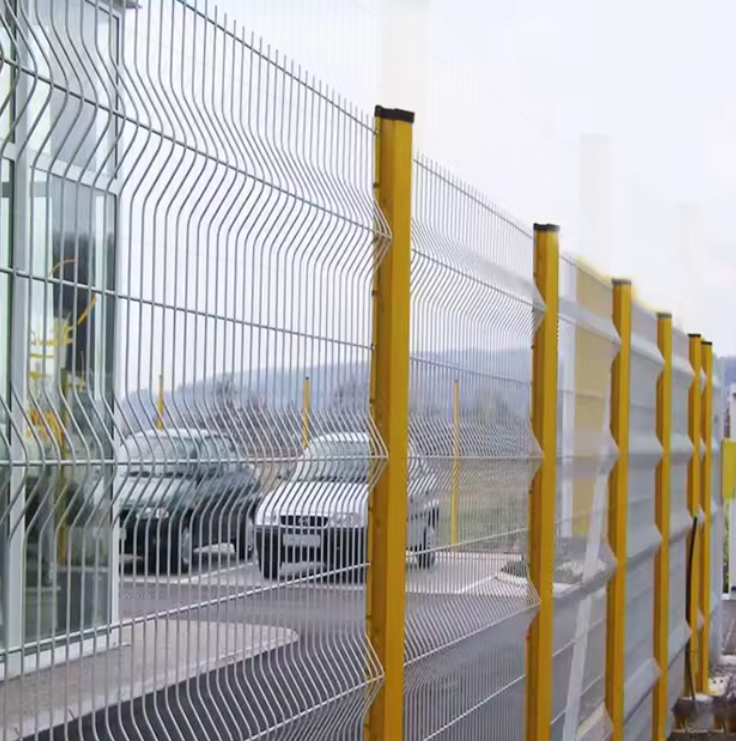
Classic Case Study: Protection Password for Global Benchmark Projects
Extreme cold environment verification: In the Alaska oil pipeline protection project, the peach shaped guardrail uses -40 ℃ anti brittle alloy steel wire, combined with a geothermal concrete base, to maintain structural stability even in extremely cold weather of minus 50 ℃, successfully resisting polar bear impact testing.
Desert high salt spray challenge: A desert prison project in the Middle East adopts PVDF fluorocarbon coating+double-layer galvanizing process. After 5000 hours of salt spray testing, it has no corrosion. Combined with snake belly knife barbed wire, it forms a three-dimensional protection system and zero escape incidents.
Urban landscape integration: Hangzhou Xixi Wetland Park adopts a design of imitation wood grain peach shaped columns and ivy climbing mesh, achieving a perfect unity of protective function and ecological landscape, and has won the International Landscape Design Gold Award.
Deep exploration of technical parameters: the ultimate pursuit from materials to craftsmanship
Breakthrough in Core Materials Science: Using Q345B low-alloy high-strength structural steel, the tensile strength has been increased to 600MPa, which is 20% higher than traditional low-carbon steel. The cold drawing process achieves wire diameter tolerance control within ± 0.05mm and grid flatness error ≤ 2mm/m ².
Anti corrosion process innovation: Exclusive research and development of "zinc aluminum magnesium alloy coating+nano ceramic sealing" technology, which has passed the neutral salt spray test for 1200 hours without red rust, improving the corrosion resistance of traditional galvanized layers by three times.
Modular design upgrade: Adopting a combination mode of "standard board+customized module", the standard board is 2.5 meters wide and adjustable in height from 1.5 to 4 meters. Combined with embedded quick connectors, the installation efficiency is improved to 200 meters per team per day.
Ecological adaptation innovation: from passive protection to active ecological integration
Vegetation Symbiotic System: Develop specialized planting troughs for climbing nets, in conjunction with climbing plants such as ivy and camellias, to achieve the integration of protective nets and vertical greening. A certain ecological community project in Shanghai achieved a 15% reduction in PM2.5 concentration through this technology.
Biological channel design: In the wildlife migration area, a bottom hollow mesh and top anti crossing mesh structure are used to ensure the safe passage of large animals and prevent small animals from crossing. After applying this design in the Canadian Rocky Mountains National Park, the migration route deviation rate of reindeer was reduced by 80%.
Low carbon material application: Using recycled polyester fiber composite mesh, the carbon footprint is reduced by 40% compared to traditional steel wire. A data center project in Sweden achieved a carbon reduction of 200 tons throughout the lifecycle of the fence using this material.
The trend of intelligent integration: a leap from physical protection to digital security
Electronic fence integration: Embedding fiber optic vibration sensors within the peach shaped guardrail frame to achieve real-time monitoring and precise positioning of intrusion behavior. After the application of a smart park project in Shenzhen, the false alarm rate decreased by 90% and the response time was shortened to 3 seconds.
AR inspection system: Develop intelligent inspection glasses based on augmented reality, allowing inspectors to view real-time data such as stress distribution and coating status of guardrails, achieving preventive maintenance. A nuclear power plant in Tokyo has deployed the system, reducing annual maintenance costs by 30%.
Adaptive adjustment system: Develop intelligent adjustment columns based on environmental perception, which automatically adjust the tension of the protective net under extreme conditions such as strong winds and earthquakes to ensure structural safety. The verification of the California earthquake zone project shows that the system can improve the seismic performance of guardrails by 50%.
Future outlook: Building a comprehensive intelligent security ecosystem
With the deep integration of 5G, IoT, and AI technologies, peach shaped guardrails are evolving from a single protective device to intelligent security nodes. In the future, through data exchange with unmanned aerial vehicle inspections, facial recognition systems, and environmental monitoring stations, an intelligent security network that integrates air and ground can be constructed. Under the goal of carbon neutrality, the adoption of green technologies such as biodegradable biobased coatings and photovoltaic power supply systems will make peach shaped guardrails a model of sustainable security.
From classic design to intelligent evolution, peach shaped guardrails always adhere to the design concept of "safety as the foundation, aesthetics as the wing, and ecology as the soul", constantly expanding the possibilities of protective facilities while safeguarding safety. This is not only a technological advancement, but also a profound interpretation of the concept of "safety as art" - making every line of defense a poetic footnote to urban civilization.


