
- All
- Product Name
- Product Keyword
- Product Model
- Product Summary
- Product Description
- Multi Field Search
English


Views: 0 Author: Site Editor Publish Time: 2026-06-04 Origin: Site


Material selection stands as a critical operational risk factor in modern industrial filtration. Choosing the wrong wire material inevitably leads to premature wear, catastrophic flow restriction, or costly unplanned downtime for your facility. Many common alloys look completely identical on a standard specification sheet. However, their physical performance in high-stress, corrosive, or abrasive environments diverges wildly. Engineers must look beyond basic dimensions to ensure continuous system reliability.
This guide provides a strictly objective, engineering-focused breakdown of three highly debated materials. We aim to clarify the exact performance thresholds of stainless steel, manganese steel, and aluminum options. You will learn how to align these unique materials with specific operational demands. Our analysis will directly aid your engineering teams in making final procurement and specification decisions.
Stainless Steel: The default for chemical resistance and temperature fluctuation. Relies on chromium content; ideal for food, pharma, and marine environments.
Manganese Steel Screen Mesh: The ultimate solution for high-impact and severe abrasion. Work-hardens under stress but sacrifices corrosion resistance.
Aluminum Metal Mesh: The lightweight, highly malleable alternative. Delivers a 65% weight reduction compared to steel, excelling in aerospace and low-stress OEM filters.
Specification Reality: Material choice must dictate wire diameter and mesh count calculations, as tensile strength dictates maximum open area limits.
Every procurement choice heavily influences overall system performance and maintenance intervals. Buyers must thoroughly evaluate three distinct failure vectors before finalizing an order. You cannot guess how a material will behave in the field.
First, you must consider corrosive degradation. Acids, strong alkalis, and saltwater rapidly attack vulnerable metals. Different chemicals require entirely different alloy defenses to survive long-term exposure. Second, operators must assess abrasive wear. Particulate sorting and high-velocity fluid flow act like sandpaper against the wire surface. A weak material will erode quickly under this constant friction. Third, mechanical stress dictates structural survival. Heavy vibration, massive pressure drops, and strict weight limits challenge the physical integrity of the screen.
Industry compliance dictates strict boundaries for material selection. Food processing facilities rely heavily on FDA-approved metallic grades. These regulations ensure completely sanitary conditions during production and prevent bacterial growth. Chemical refinement plants also mandate specific material classifications to maintain operational safety. Selecting the right Filter Mesh prevents catastrophic system failure. It also ensures you maintain strict regulatory alignment across your entire operation.
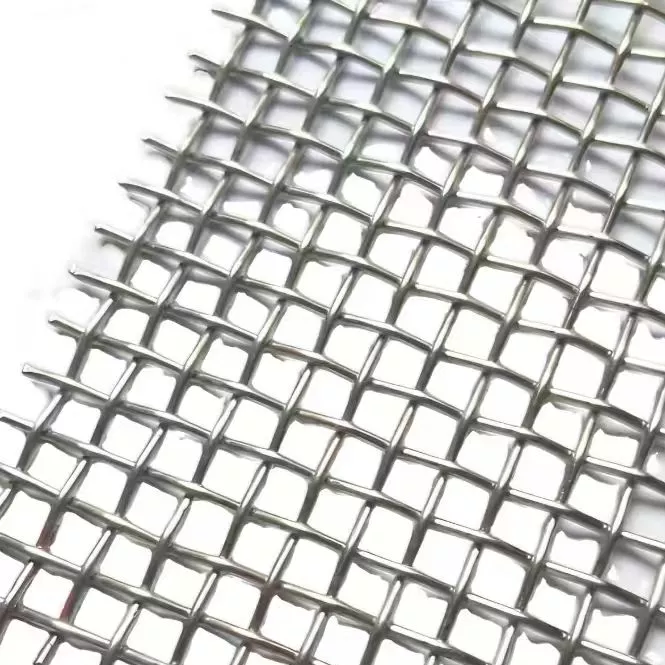
Stainless steel dominates industries demanding high chemical purity and thermal stability. It relies on a unique passivation mechanism to actively resist degradation. The alloy contains a minimum of 10.5% chromium. This specific chromium content reacts with environmental oxygen. It forms a microscopic, self-repairing oxide layer. This barrier effectively prevents deep rust formation across the wire surface.
Engineers typically choose between two primary stainless grades:
T-304: This grade contains approximately 8% nickel. It easily handles standard industrial exposure and mild chemical processing. It serves as the excellent baseline for general manufacturing.
T-316: This premium grade contains 2-3% molybdenum. This metallic addition makes it strictly necessary for high-chloride, acidic, or marine environments. It actively resists pitting corrosion from salt exposure.
Stainless wire provides exceptional physical durability alongside chemical defense. It easily withstands extreme operational temperatures up to 1700°F. The material maintains rigid structural integrity across varying mesh counts. It resists significant physical impact without stretching or tearing.
Quality verification demands strict attention from procurement teams. A common mistake is accepting cheap 200-series substitutions. These lower grades lack sufficient nickel and will corrode rapidly in standard environments. Standard 304 and 316 grades are nominally non-magnetic. However, heavy cold working during the wire weaving process often induces slight magnetism. The physical stress causes martensite formation in the steel lattice. Therefore, a simple magnet test remains completely insufficient for accurate quality control. We recommend you always demand verified chemical composition reports.
Certain industrial environments easily destroy standard corrosion-resistant alloys. High-impact operations demand a specialized metallurgical approach. High-manganese steel provides a highly unique work-hardening advantage. The metal physically hardens upon sustained blunt impact. The surface structure actually becomes progressively more resistant to wear over time.
This phenomenal trait makes Manganese Steel Screen Mesh the superior choice for aggressive sorting. It excels in heavy-duty aggregate screening, mining trommels, and vibratory filtration. Standard stainless alloys would quickly thin out and snap in these environments. Manganese steel absorbs the shock of falling rocks and abrasive particulate effortlessly.
Buyers must clearly understand the necessary trade-offs. This heavy-duty alloy completely lacks chemical resistance. Manganese steel will rust rapidly in damp, acidic, or corrosive conditions. A best practice is to select it strictly for unmatched physical toughness. You should never choose it for chemical purity or cleanroom environments.
Verification requires distinct chemical testing procedures. You cannot rely on visual inspection alone. It looks identical to standard carbon steel on a warehouse floor. A simple copper sulfate drop test provides quick field verification. You apply the liquid directly to the cleaned wire surface. The chemical reacts by turning purple to confirm a high-manganese content. This simple test prevents costly installation errors.
Weight reduction drives constant innovation in specific engineering sectors. Pure aluminum (1100 grade) or advanced alloys (like 5056) provide a massive weight advantage. They are up to 65% lighter than standard stainless steel options. This drastic reduction significantly lowers the mechanical load on supporting structures. It directly reduces shipping costs and makes installation much easier.
Aluminum provides baseline corrosion resistance without requiring extra chemical coatings. The metal naturally forms a tough aluminum oxide layer immediately upon oxygen exposure. This protective barrier stops further degradation in mild atmospheric environments. Furthermore, the material offers excellent thermal and electrical conductivity. This proves highly useful for dissipating static charge in air filtration systems.
We see distinct application sweet spots for this lightweight metal. Aluminum Metal Mesh is ideal for custom-formed OEM filters. It performs exceptionally well in aerospace components and heavy HVAC filtration. Scenarios requiring complex stamping or tight pleating benefit greatly from its high ductility.
However, you must acknowledge its strict mechanical risk factors. Aluminum possesses a significantly lower tensile strength compared to steel. A common mistake is placing it in high-pressure hydraulic lines. Sudden pressure spikes will quickly burst the screen. You should also avoid using it in environments experiencing heavy mechanical shocks or heavy debris impacts. It simply cannot absorb blunt force.
Comparing these alloys directly clarifies the complex specification process. You must carefully balance mechanical strength against environmental resistance. We rank these primary materials across four core operational metrics to guide your strategy.
Yield Strength & Impact Resistance: Manganese Steel > Stainless Steel > Aluminum. Manganese absorbs shock, stainless holds shape, and aluminum bends easily.
Corrosion & Chemical Resistance: Stainless Steel (316 > 304) > Aluminum > Manganese Steel. Stainless repels acids, aluminum survives air, and manganese rusts quickly.
Weight & Malleability: Aluminum > Stainless Steel > Manganese Steel. Aluminum offers extreme lightness, while manganese acts as a heavy industrial barrier.
Cost Assumptions: Aluminum generally sits between standard carbon steel and premium stainless alloys. However, raw material market fluctuations frequently alter these price gaps. Manganese steel often represents a premium upfront cost but saves money through extended lifespan in mining.
We designed this cross-comparison chart to simplify your shortlisting process:
Performance Metric | Stainless Steel (316) | Manganese Steel | Aluminum Alloy |
|---|---|---|---|
Chemical Resistance | Excellent (Best) | Poor (Rapid Rust) | Moderate (Oxide Layer) |
Impact Durability | Moderate | Exceptional (Best) | Low (Prone to tearing) |
Weight Profile | Heavy | Very Heavy | Ultra-Lightweight (Best) |
Thermal Tolerance | Up to 1700°F | Moderate | Low (Prone to melting) |
Proper material selection represents only the first engineering step. You must accurately calculate the physical dimensions to ensure proper flow dynamics. Sizing requires precise mathematical formulas to prevent system bottlenecks.
Use this standard industry calculation to determine your exact mesh specifications:
Determine your target aperture opening size in millimeters.
Select an appropriate wire diameter capable of handling the system pressure.
Apply the formula: Mesh count = 25.4 mm / (wire diameter + opening).
Open area constraints heavily influence final fluid flow rates. Engineers must calculate the Open Area Percentage to understand fluid dynamics. Weaker materials fundamentally alter this math. For example, aluminum may require much thicker wire diameters to achieve the same burst strength as stainless steel. This necessary thickness fundamentally lowers the overall percentage of open area. A lower open area aggressively restricts your flow rate and increases pump strain.
Supplier quality assurance prevents disastrous plant installations. We strongly advise buyers against relying on visual inspections upon delivery. All woven metals look practically identical under a standard mill finish. Always instruct your procurement team to request official Mill Test Reports (MTRs). These certified documents confirm the exact chemical compositions. They verify the precise nickel, chromium, or manganese levels in the batch. Relying on MTRs ensures you receive the exact structural performance you specified.
We must emphasize that there is no universal "best" filter mesh material. Your final decision logic must align directly with specific environmental and physical demands. Choose stainless steel for unmatched chemical purity and thermal stability. Opt for manganese steel options when fighting blunt-force abrasion in heavy industry. Select aluminum mesh for weight-sensitive, highly formable applications where pressure remains low.
Always consult with an experienced metallurgical engineer before finalizing complex filtration designs. We highly encourage you to request physical material samples from manufacturers. Review the supplier's MTRs closely before committing to bulk procurement contracts. Accurate material specification guarantees continuous operation and maximizes your system reliability.
A: Only if the system operates under low pressure and is not exposed to harsh caustic cleaning chemicals that degrade aluminum.
A: Cold-working and stress during the weaving process can induce martensite formation in the wire. This imparts a slight magnetic pull. It is a normal mechanical reaction and separates cold-worked mesh from genuinely fake or low-grade carbon steel.
A: Apply a few drops of a copper sulfate solution directly to the wire surface. If the material is high manganese steel, the tested area will quickly turn purple. You can also perform targeted hardness testing to measure its resistance to impact.
A: Mesh size refers to holes per linear inch; microns measure the actual physical size of the particle permitted to pass through the opening.


