
- All
- Product Name
- Product Keyword
- Product Model
- Product Summary
- Product Description
- Multi Field Search
English


Views: 0 Author: Site Editor Publish Time: 2026-08-31 Origin: Site


Commercial contractors and property owners often face a frustrating dilemma. They must balance structural integrity for earth retention against strict project budget constraints. Finding the right solution is rarely simple when soil stability is on the line. Traditional poured concrete or modular block retaining walls remain the default choice for many builders. However, industry professionals increasingly evaluate gabions as a highly cost-effective alternative. These wire mesh structures offer unique structural benefits. This article moves beyond generic estimates to deliver absolute clarity. We provide a hard, evidence-based breakdown of materials, labor, and long-term site dynamics. We explore foundational requirements, drainage necessities, and machinery costs in detail. By the end of this comprehensive guide, you will understand exactly which earth retention strategy makes the most financial sense for your specific project constraints.
Upfront, gabions are typically 20% to 40% cheaper than traditional poured concrete or segmental block retaining walls, primarily due to reduced foundation and drainage requirements.
The actual cost-saving relies heavily on local aggregate availability; expensive imported stone will quickly erase the financial benefits of a gabion wall.
Gabions naturally relieve hydrostatic pressure, eliminating the need for complex, costly drainage systems required behind solid walls.
While highly cost-effective for low-to-medium height applications, gabions may require specialized engineering and thicker bases for high-load walls, shifting the cost equation.
Establishing the baseline financial outlay is your first critical step. You need to know the upfront cash required to get the structure out of the ground. Comparing these two methods reveals significant differences in how you allocate capital.
Material costs form the foundation of your construction budget. Wire and stone operate on a completely different pricing model than concrete. Heavy-duty galvanized mesh baskets offer a predictable per-square-foot baseline. You buy them flat-packed. This keeps shipping costs incredibly low. The primary budget lever is the stone fill. You have tremendous flexibility here. Using local quarry run or recycled crushed concrete slashes costs dramatically. You pay pennies on the dollar compared to premium materials. However, importing smooth river rock changes everything. Expensive decorative stone can easily double your material budget.
Conversely, traditional walls require expensive raw materials. You must purchase ready-mix concrete and heavy steel rebar. You also need expensive wooden formwork. Modular segmental blocks carry high manufacturing and shipping costs. Their dense weight makes freight expensive. The material cost for solid structures remains rigidly high regardless of your location.
Labor often consumes more than half of any construction budget. Traditional masonry demands highly skilled labor. Masons command premium hourly rates in today’s market. Building a concrete structure involves multiple slow steps. Workers must build formwork and tie rebar grids. They must pour concrete and wait for curing. These delays add hidden labor hours to your project.
Wire basket assembly relies on a totally different workflow. General laborers can easily handle the installation. They unfold the flat-packed mesh and lace the edges together. You do not need specialized masonry skills. This faster stacking process drastically reduces your daily labor burn rate.
However, you cannot ignore equipment needs. You still need heavy machinery. Skid steers or compact excavators are absolutely mandatory. They must transport and dump heavy aggregate into the baskets. Moving stone manually takes far too long. You must factor daily machine rental rates into your baseline cost.
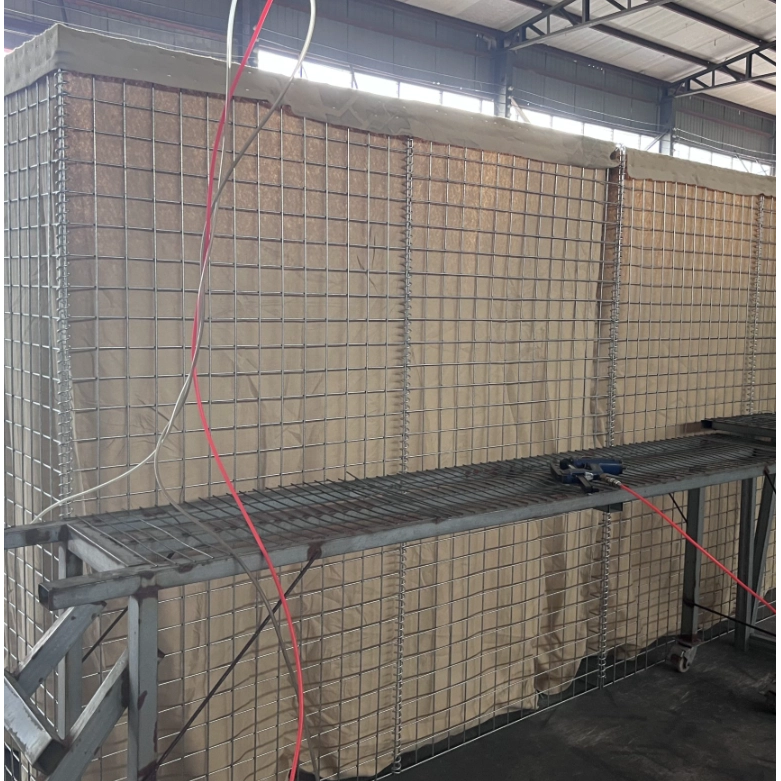
We must explore the secondary engineering features next. These technical advantages translate directly into massive budget savings. Many project planners overlook these hidden financial benefits.
Foundations dictate a huge portion of retaining wall budgets. Concrete walls need deep frost-line trenching. You must pour thick concrete footers to prevent tipping. This requires extensive excavation and soil removal. Wire basket structures operate differently. They are flexible gravity structures. A simple, properly compacted gravel leveling pad often suffices. You avoid deep excavations entirely. Skipping expensive poured footers saves thousands of dollars on commercial projects.
Drainage is another hidden sinkhole for budgets. Solid walls trap water. This trapped water builds immense hydrostatic pressure. To prevent blowout, you must install complex drainage systems. You need weep holes and perforated PVC pipes. You must also install secondary washed stone backfill layers. Wire baskets are inherently permeable. Water simply flows straight through the stone voids. This natural drainage eliminates costly drainage infrastructure entirely.
Flexibility matters immensely in unstable soils. Ground movement cracks rigid concrete. Repairing cracked concrete costs thousands in epoxy injections. Sometimes you must replace entire sections. A gabion wall simply deforms slightly. It adapts to soil settlement without losing structural integrity. This flexibility saves massive immediate remediation costs in shifting soils.
Evaluating lifecycle costs over a 20- to 50-year horizon reveals the true value of your investment. You must look past the initial construction phase. Long-term durability determines the ultimate financial winner.
Modern baskets use advanced protective layers. Manufacturers apply Galfan coating or heavy PVC jackets to the steel. These materials withstand corrosive environments exceptionally well. Dry inland areas see 50-plus years of structural lifespan. Coastal environments benefit greatly from PVC coatings. The plastic jacket prevents salt spray degradation. This engineered durability easily rivals traditional poured concrete.
Compare the ongoing maintenance obligations carefully. Concrete cracks over time due to freeze-thaw cycles. Modular blocks shift and require resetting. Patching concrete demands specialized labor and expensive materials. Wire structures require near-zero maintenance. The internal stones settle naturally into place. If a wire snaps, you simply lace a new panel over the damaged section. The repair process is cheap and immediate.
Solid walls degrade aesthetically over time. They stain, chip, and look weathered. Wire structures actually do the opposite. Silt naturally accumulates in the stone voids over the years. Native vegetation takes root within the structure. This root network actually increases structural strength. The wall blends into the natural landscape beautifully. This natural integration reduces aesthetic degradation and boosts property value.
You must recognize project constraints clearly. Sometimes, traditional methods remain the financially logical choice. Identifying these limitations builds realistic expectations.
Site access is a major dealbreaker. Heavy machinery must access the site easily. Skid steers need room to transport and load the stone. If access is tight, workers must move stone by wheelbarrow. Manual labor will cause installation costs to skyrocket. When machines cannot fit, traditional modular blocks often become cheaper.
High-end aesthetics change the math completely. Standard commercial installations use machine-dumped stone. If your client demands hand-facing the outward-facing stones, labor slows down. Workers must meticulously stack premium architectural stone like a jigsaw puzzle. This specialized labor negates your standard cost savings. The project quickly becomes a premium masonry job.
Footprint restrictions are critical for urban planning. Gravity structures require a very wide base. The base typically measures 50% to 75% of the wall's total height. If you have tight property lines, you cannot sacrifice that much land. Thin reinforced concrete requires much less horizontal space. In tight urban lots, poured concrete might be the only compliant option.
You need a rapid evaluation checklist. Finalize your approach based on realistic project variables. Review these criteria before ordering any materials.
Project Variable | Wire Mesh Systems | Traditional Concrete |
|---|---|---|
Base Material Cost | Low (If local stone is used) | High (Requires rebar and forms) |
Foundation Needs | Minimal (Compacted gravel pad) | Extensive (Deep concrete footers) |
Drainage Needs | Self-draining (Permeable) | Complex (Pipes and weep holes) |
Space Requirements | Wide footprint needed | Narrow footprint possible |
Installation Speed | Fast (No curing required) | Slow (Forming and curing time) |
Use this rapid checklist to finalize your earth retention strategy.
Choose Wire Structures if: You have easy access to local aggregate. You have ample footprint space along the property line. Your site faces moderate-to-high soil moisture. You want a functional, rapid deployment without waiting for concrete to cure.
Choose Traditional Retaining Walls if: You are restricted by very tight property lines. You require vertical height over 10 feet without stepping back the structure. Your site lacks heavy equipment access. You need a highly refined, uniform architectural finish.
We advise consulting an experienced structural engineer immediately. They must verify your soil load-bearing capacity before you order materials. A quick geotechnical review prevents disastrous structural failures later. Once you have engineering approval, you can confidently finalize your material orders.
Wire mesh structures are demonstrably cheaper for most standard erosion control projects. They excel in landscaping applications provided your site logistics align. You save money by eliminating deep concrete footers. You avoid expensive drainage pipes and specialized masonry labor. However, you must respect footprint requirements and machinery access limits. If you have the space and local stone, this method delivers unmatched financial value.
Are you ready to optimize your site budget? Contact our sales team today. We provide custom quotes on commercial-grade wire baskets. You can also request our technical specification sheets for your engineer's immediate review.
A: Recycled crushed concrete and local quarry rubble offer the most cost-effective solutions. Using locally sourced angular stone minimizes heavy freight charges. You avoid the premium pricing attached to decorative river rock. Angular rubble also interlocks better. This provides superior structural stability over smooth, rounded stones.
A: No, they rarely require poured concrete footers. A properly leveled and compacted gravel pad is usually sufficient. This flexible foundation approach saves thousands of dollars in excavation costs. However, towering structures or highly unstable clay soils may still require engineer-specified foundational reinforcements.
A: Yes, DIY installation is highly viable for decorative walls under three feet tall. You can assemble the baskets and fill them manually. However, taller retaining structures require heavy machinery to move large stone volumes efficiently. Anything over three feet also demands strict engineering compliance to prevent failures.
A: Modern wire baskets utilize Galfan coatings or heavy PVC jackets. These advanced materials easily last 50 to 70 years in non-corrosive environments. This lifespan matches or exceeds standard unmaintained concrete. Furthermore, vegetation often roots within the stone voids over time. This natural integration actually increases overall longevity.


