
- All
- Product Name
- Product Keyword
- Product Model
- Product Summary
- Product Description
- Multi Field Search
English


Views: 0 Author: Site Editor Publish Time: 2026-10-07 Origin: Site


Specifying industrial flooring demands a careful approach. You must balance load-bearing safety, structural dead weight, and your overall project budget. Facility managers and engineers constantly face this optimization challenge. The designations 355/20/100 and 355/30/100 share identical bearing bar dimensions. Both rely on 35x5mm bars. Both utilize a consistent 100mm cross bar spacing. However, a 10mm difference in their bearing bar pitch fundamentally alters their performance profile.
This slight geometric shift changes everything. It impacts material density, overall rigidity, and specific load capabilities. You cannot swap one for the other without structural consequences. This guide breaks down the engineering differences, cost implications, and exact application scenarios for each specification. We explore these details so you can make a defensible, compliant procurement decision. You will learn how to match the right mesh density to your specific industrial environment.
Nomenclature: "355" denotes a 35mm x 5mm bearing bar; "100" indicates 100mm cross bar spacing. The differentiator is the bearing bar pitch: 20mm vs. 30mm.
355/30/100 Steel Grating: The industry standard. Offers the best balance of structural strength, weight, cost, and open area for drainage. Ideal for standard walkways and platforms.
355/20/100 Steel Grating: A high-density (dense-mesh) grating. Significantly heavier and more expensive, but mandatory for heavy rolling loads, small-wheeled traffic, and strict dropped-object prevention.
Finish & Safety: Both specifications can be manufactured as serrated steel grating for maximum slip resistance and galvanized steel grating for anti-corrosion compliance.
Understanding industrial flooring nomenclature is essential for accurate procurement. Manufacturers use a standardized numbering system to communicate precise geometric dimensions. The three-part sequence dictates the physical framework of the entire panel.
Both specifications share a robust structural foundation. They utilize 35mm depth by 5mm thickness load-bearing bars. These primary bars handle the vertical stress. They span the gap between structural supports. Both specifications also utilize a 100mm cross bar pitch. These perpendicular bars stabilize the primary bearing bars. They prevent lateral buckling under heavy loads. This shared 35x5mm and 100mm baseline provides a strong, reliable starting point for industrial applications.
The middle number defines the bearing bar pitch. For 355/30/100 Steel Grating, manufacturers space the primary bearing bars 30mm apart. They measure this distance from the center of one bar to the center of the next. This creates a highly efficient grid. It represents the most common pitch globally. It provides approximately 80% open area. This generous open space facilitates excellent airflow and light transmission.
For the alternative specification, manufacturers space the bearing bars 20mm apart. This tighter spacing creates a dense mesh configuration. It noticeably reduces the open area. However, it increases the amount of steel per square meter by approximately 30 to 35 percent. This higher density radically transforms the panel. It transforms a standard pedestrian walkway into a heavy-duty industrial surface capable of extreme localized resistance.
Specification Feature | 355/30/100 Standard Mesh | 355/20/100 Dense Mesh |
|---|---|---|
Bearing Bar Size | 35mm x 5mm | 35mm x 5mm |
Bearing Bar Pitch | 30mm (Center-to-Center) | 20mm (Center-to-Center) |
Cross Bar Pitch | 100mm | 100mm |
Approximate Open Area | ~80% | ~60% |
Steel Density / Weight | Standard baseline | ~30-35% Heavier |
Selecting between these two pitches requires multidimensional analysis. You must evaluate mechanical behavior, financial impact, and operational maintenance. Every facility presents unique demands. We evaluate these panels across three primary engineering dimensions.
Structural integrity remains the foremost concern for any elevated platform. The 30mm pitch safely handles high pedestrian traffic. It comfortably supports standard industrial point loads, such as stationary equipment or occasional maintenance carts. It provides sufficient rigidity for normal daily operations without excessive bending.
Conversely, the 20mm pitch alters the load distribution mechanics. Because it features more bearing bars per meter, it distributes localized loads much more effectively. The tighter grid resists deformation under extreme pressure. It proves superior for high-impact zones. Facilities specify this dense mesh for heavy rolling loads. Forklifts, pallet jacks, and heavy tool trolleys exert intense point pressure. The 20mm pitch ensures minimal deflection under these dynamic stresses.
Best Practice: Always request maximum deflection tables from your manufacturer. Ensure the predicted bending remains within safe limits (typically L/200) for your specific unsupported span.
Adding more steel fundamentally changes the economic equation. Material density directly correlates to panel weight. The 355/20/100 steel grating uses roughly 33% more bearing bars than the standard 30mm variation. This density significantly increases the raw material volume.
Consequently, the 20mm pitch carries a proportionally higher upfront material cost. You must also account for a substantial shipping weight penalty. Heavy freight costs can impact initial procurement budgets rapidly. Furthermore, structural engineers must account for the heavier dead weight. They must calculate this added mass when designing the underlying steel support structure. Heavier flooring often requires thicker, stronger I-beams below it.
Common Mistake: Procuring dense mesh panels without upgrading the substructure. Placing significantly heavier panels on light-duty supports can lead to catastrophic structural failure.
Environmental factors dictate mesh selection just as much as load requirements. Clearance and clogging present massive challenges in industrial settings. The 30mm pitch provides superior liquid and debris drainage. The wider gaps allow bulk materials to fall through effortlessly. This makes it ideal for outdoor, chemical, or mining environments. In these sectors, material build-up poses a severe slip hazard.
In contrast, object retention drives the need for tighter meshes. Engineers specify the 20mm pitch when dropped-object protection is critical. On multi-level platforms, a dropped wrench can cause fatal injuries below. The narrower 20mm gap prevents standard hand tools and large bolts from falling through the floor. It acts as a built-in safety net for complex, vertical work environments.
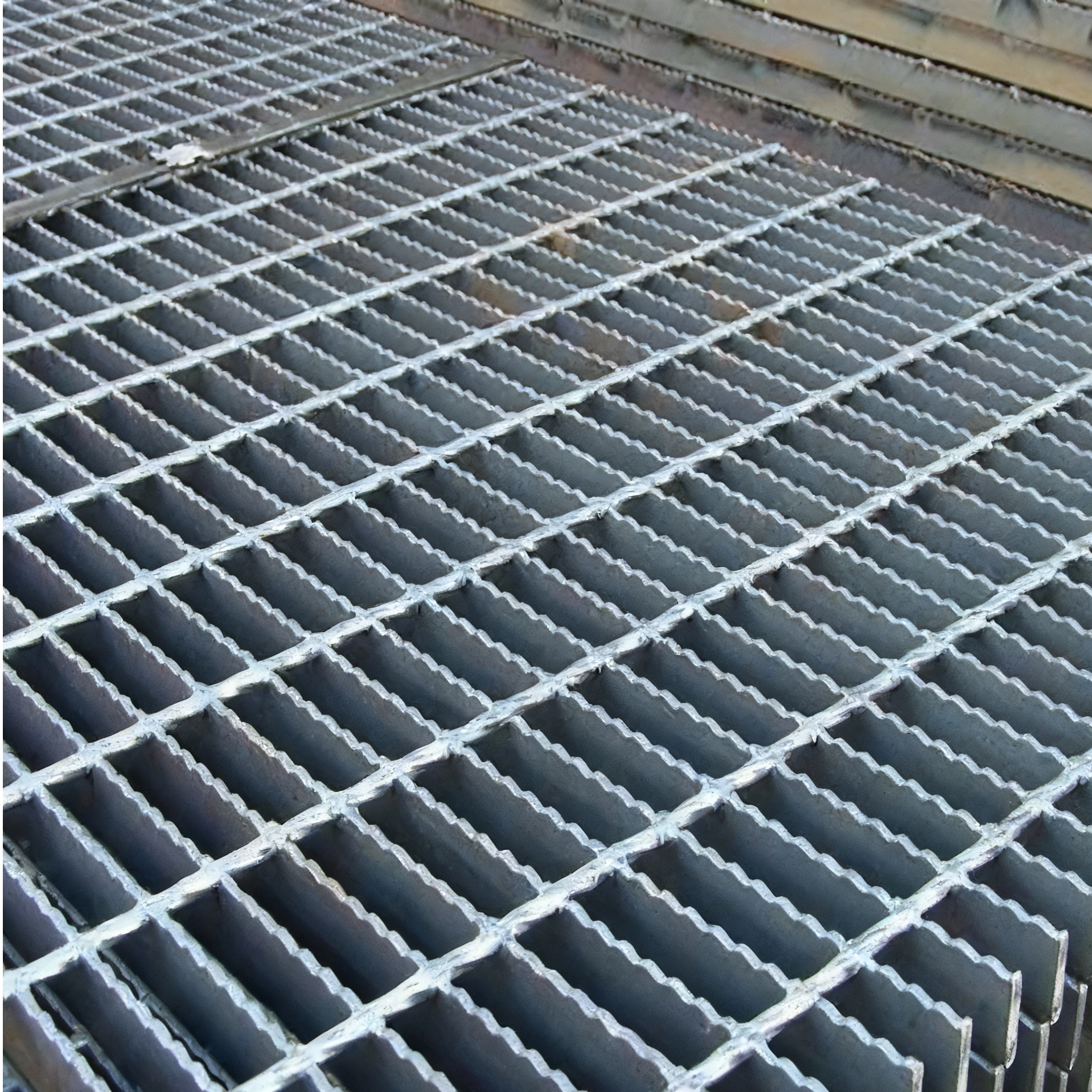
Matching the technical specification to the physical environment ensures long-term success. Over-engineering wastes money. Under-engineering compromises safety. You must align the pitch width with real-world operational demands.
You should default to the standard 30mm pitch for the vast majority of standard industrial applications. It serves as the backbone for modern facility infrastructure. Consider this specification for the following scenarios:
Standard Walkways: Catwalks, stair treads, and standard industrial platforms rarely require dense mesh. The 30mm gap provides ample strength for personnel.
Large Scale Projects: Projects requiring vast square meterage demand budget optimization. Structural dead weight becomes a primary constraint. The lighter panel keeps the overall project viable.
Harsh Environments: Environments requiring high ventilation and rapid liquid dispersal benefit from the 80% open area. Washdown areas, offshore rigs, and petrochemical plants rely on this wide gap to prevent fluid pooling.
This 355/30/100 steel grating delivers reliable performance across general use cases. It keeps the infrastructure lightweight and highly functional.
You must escalate to the dense mesh specification when facing specific operational hazards. The heavier panel solves unique safety and mechanical challenges. Specify the 20mm pitch in these rigorous scenarios:
Wheeled Traffic: Trench covers subjected to pneumatic tires, pallet jacks, or small hard wheels require tight spacing. Wide gaps trap small caster wheels. The dense mesh provides a smooth rolling surface.
Public Safety Overpasses: Walkways over public areas demand strict safety protocols. A fine mesh stops objects from falling onto pedestrian traffic below. It mitigates severe liability risks.
Accessibility Compliance: Specific ADA (or local equivalent) compliance mandates tighter spacing. Narrow gaps prevent wheelchair entrapment. They also prevent walking aid interference, ensuring safe passage for all individuals.
Raw carbon steel rarely survives harsh industrial environments untreated. You must enhance the base metal to ensure longevity and personnel safety. Surface profiles and chemical coatings play a vital role in final performance.
The top edge of the bearing bar determines slip resistance. Plain bars offer a smooth surface. They suffice for dry, indoor environments. However, many facilities face exposure to grease, oil, or continuous moisture. In these conditions, you must prioritize traction.
Upgrading either specification to a serrated steel grating is highly recommended. Manufacturers cut small notches into the top edge of the bearing bars. This serration drastically improves the coefficient of friction. It helps facilities meet strict workplace safety mandates regarding slip-and-fall prevention.
Best Practice: Specify serrated profiles for all exterior stair treads and any platform located near automated lubrication stations.
Standard carbon steel will degrade rapidly when exposed to oxygen and moisture. Rust compromises structural integrity quickly. Painting offers temporary relief but chips easily under foot traffic. For true durability, you must employ advanced metallurgical protection.
Specifying hot-dip galvanized steel grating is standard industry practice. This process immerses the fabricated panels into molten zinc. The zinc forms a metallurgical bond with the steel substrate. This coating complies with ISO 1461 or ASTM A123 standards. It ensures a 25+ year lifespan with virtually zero maintenance. Both the 20mm and 30mm pitches perform exceptionally well after proper galvanization.
Successful procurement extends beyond choosing the right pitch. You must manage logistical hurdles and installation complexities. Failing to anticipate these implementation risks can derail project timelines.
Availability varies drastically between specifications. The standard 30mm pitch is typically an off-the-shelf product. Suppliers keep it stocked in standard panel sizes. You can often procure it rapidly.
Conversely, the 20mm pitch is frequently a custom mill run. Because it serves niche applications, suppliers rarely stock massive quantities. You must anticipate longer lead times. Factor this manufacturing delay into your construction schedule early.
Do not assume a heavier panel automatically allows for a wider support span. While the 355/20/100Steel Grating handles localized point loads better, its own increased dead weight adds stress to the center of a long span. You must run specific deflection calculations for every unsupported gap.
Furthermore, handling considerations change dramatically. The increased panel weight of the dense mesh creates logistical challenges. Installation crews can often maneuver standard panels by hand. Dense panels usually require mechanical lifting equipment during installation. You must deploy cranes or specialized forklifts. This requirement heavily impacts labor costs and site logistics.
Common Mistake: Failing to budget for heavy machinery rental during the installation phase of a dense-mesh flooring project.
Making the right procurement choice protects your personnel and your structural assets. Do not over-engineer if you don't have to. Choose the standard 30mm pitch for general industrial applications. It optimizes upfront cost, physical weight, and fluid drainage effectively. It remains the backbone of industrial facility design for good reason.
Only escalate to the heavier 20mm dense mesh when operational hazards demand it. Reserve this specification for heavy rolling wheeled loads, strict dropped-object safety protocols, or local accessibility regulations. As a critical next step, always consult your structural engineer regarding maximum unsupported spans for your selected pitch. Finally, request material test reports (MTRs) from your supplier. These documents verify the steel grade and the exact galvanization thickness, guaranteeing your installation meets all safety mandates.
A: While it supports heavier rolling loads than 30mm pitch, true vehicular (H20) loading typically requires deeper and thicker bearing bars. Tighter pitch alone cannot handle truck weight. You generally need 50x5mm bars or greater for roadway environments.
A: Yes, marginally. The serrations are cut directly into the load-bearing depth of the bar. This material removal can reduce overall load capacity by up to 5-10%. You must factor this slight reduction into your structural engineering calculations.
A: The 20mm pitch is inherently safer for general pedestrian traffic and small heels. However, true "heel-safe" environments often require even tighter spacing, such as 15mm gaps, or highly specialized wedge-wire profiles to ensure absolute safety.
A: Galvanizing dense mesh requires careful dipping techniques by the manufacturer. Narrow gaps increase the risk of zinc pooling or bridging between the bars. This can block drainage holes and require manual finishing. Always work with a highly reputable supplier.


